Shared Mobility
Shared mobility hubs offer people the opportunity to hire a range of transport modes - bikes, e-bikes, e-scooters, e-cargo bikes and electric vehicles - on a ‘pay-as-you-go’ basis. They also offer people a wide range of choice in how they make journeys. Three SMP Actions (18, 31 and 87) seek to expand the availability of shared bikes, cars and powered personal transporters, while the Programme for Government sets out a commitment to establish mobility hubs in each local authority area.
the Provision of Hubs and the continued advancement of a planned Mobility Hubs Pilot Programme.
The Policy Statement, published in June 2025, aims to bring greater coherence to the development of shared mobility services and hubs, ensuring that these can be rolled out across the country in a consistent, safe and measured way. It outlines how shared mobility can benefit local businesses, complement measures to improve our urban realm, and reinforce efforts to reduce congestion and improve air quality in our towns and cities. The Statement was informed by a public consultation process undertaken in 2024, which received 100 submissions, and by extensive engagement with local authorities, transport providers, and community stakeholders.
Building on the momentum of previous years, 2024 and early 2025 marked a significant step forward in the effort to expand and support shared mobility options nationwide. Two key developments were progressed over this period: the publication of a National Policy Statement on Shared Mobility and
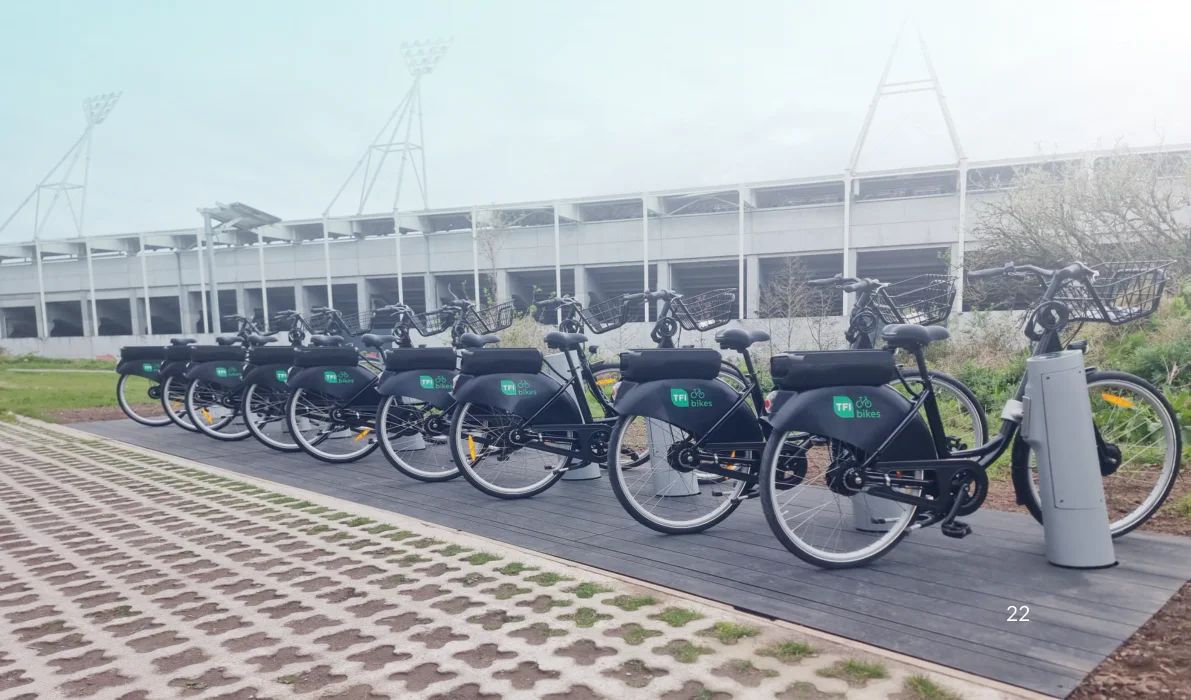
Figure from page 24
The Statement identifies 12 Policy Goals that the Government will pursue to enable the development of a shared mobility ecosystem:
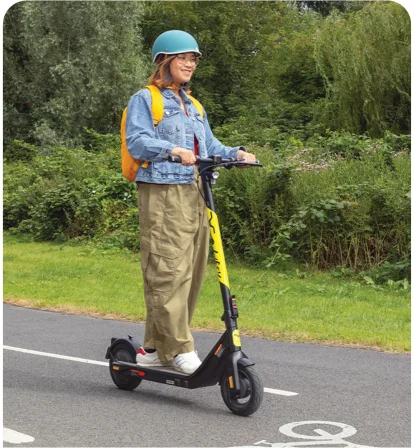
Figure from page 25
-
Integrate planning for mobility hubs into Metropolitan Area Transport Strategies and other relevant Plans
-
Implement promotional campaign(s) to support the uptake of shared mobility modes.
-
Develop brand identity for publicly built and procured shared mobility hubs
-
Prepare guidance for local authorities on the development of inclusive shared mobility hubs in line with universal design principles
-
Develop a data strategy for the usage and sharing of data with national and local authorities by all shared mobility providers operating in Ireland
These Policy Goals will be stepped out into more defined actions with measurable outputs in the next Sustainable Mobility Policy Action Plan.
- Work with shared mobility providers to promote safe usage of shared micromobility modes
In parallel and as outlined in more detail above in the section on ‘modified’ actions, the Department and the National Transport Authority (NTA) have been progressing a Mobility Hubs Pilot Programme, which will see the development of an initial network of shared mobility hubs across selected urban centres. These pilots will test different models of integration between shared bikes, e-scooters, car clubs, and public transport, with a view to informing a scalable national approach. The Pilot Programme will also explore how shared mobility can support broader policy objectives, including social inclusion, accessibility, and climate action. Following the submission of a Preliminary Business Case to the the Environment (DCEE) in 2024, the programme received approval in principle for support under the Climate Action Fund, which allowed for work to progress on the development of the next phase – the preparation of a Detailed Business Case (DBC). This was well advanced by the end of the period covered by this Report, with the expected DBC due to be finalised in Q4 2025 and procurement to follow thereafter.
-
Explore ways to support relevant small businesses and employment opportunities through the development of shared mobility hubs
-
Explore options for supporting the use of shared mobility hubs, with a particular focus on disadvantaged groups and micro-enterprises
-
Expand the provision of shared micromobility through shared mobility hubs in the Five Cities
10.Develop and test measures to support the uptake of shared mobility modes in different urban settings and examine how the State can effectively support the sustainable development of shared mobility services
11.Support research that tests the effectiveness and impact of shared mobility on a number of public policy areas including emissions reduction
12.Build on learnings from the NTA shared mobility hub pilot and other current shared mobility schemes, develop a detailed Shared Mobility Policy.
Pages 24–25 · View in original PDF