Shared Mobility
Shared mobility hubs offer people the opportunity to hire a range of transport modes - bikes, e-bikes, e-scooters, e-cargo bikes and electric vehicles - on a ‘pay-as-you-go’ basis. They also offer people a wide range of choice in how they make journeys. Three SMP Actions (18, 31 and 87) seek to expand the availability of shared bikes, cars and powered personal transporters, while the Programme for Government sets out a commitment to establish mobility hubs in each local authority area.
the Provision of Hubs and the continued advancement of a planned Mobility Hubs Pilot Programme.
The Policy Statement, published in June 2025, aims to bring greater coherence to the development of shared mobility services and hubs, ensuring that these can be rolled out across the country in a consistent, safe and measured way. It outlines how shared mobility can benefit local businesses, complement measures to improve our urban realm, and reinforce efforts to reduce congestion and improve air quality in our towns and cities. The Statement was informed by a public consultation process undertaken in 2024, which received 100 submissions, and by extensive engagement with local authorities, transport providers, and community stakeholders.
Building on the momentum of previous years, 2024 and early 2025 marked a significant step forward in the effort to expand and support shared mobility options nationwide. Two key developments were progressed over this period: the publication of a National Policy Statement on Shared Mobility and
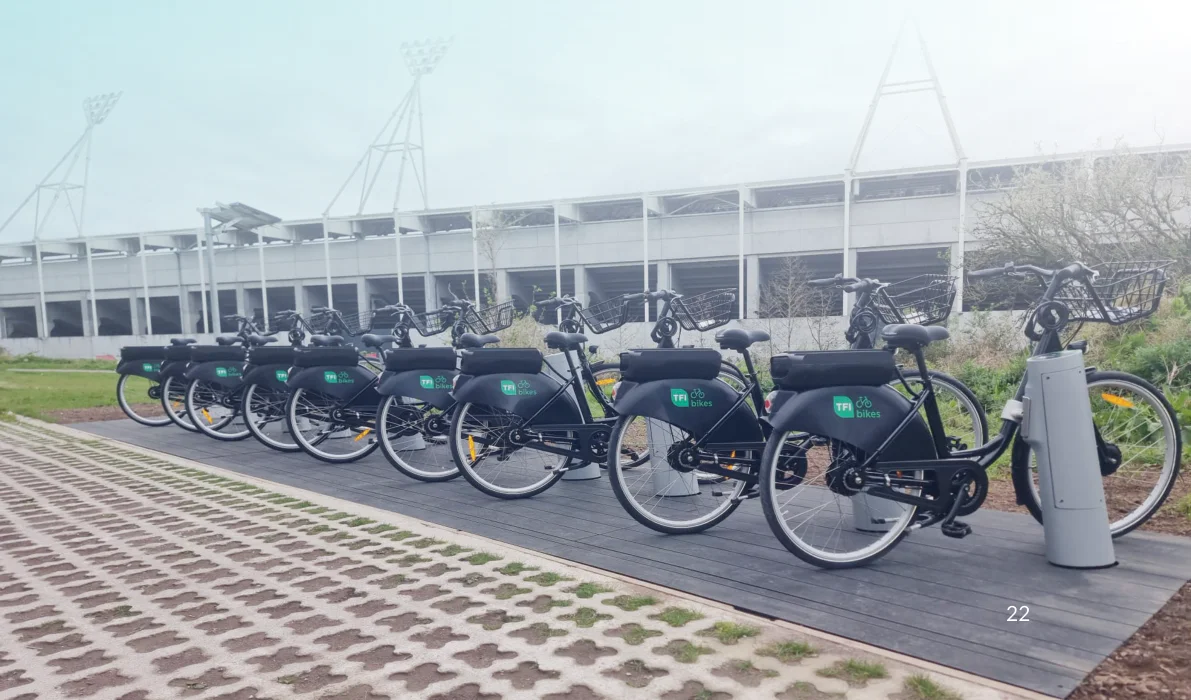
Figure from page 24
The Statement identifies 12 Policy Goals that the Government will pursue to enable the development of a shared mobility ecosystem:
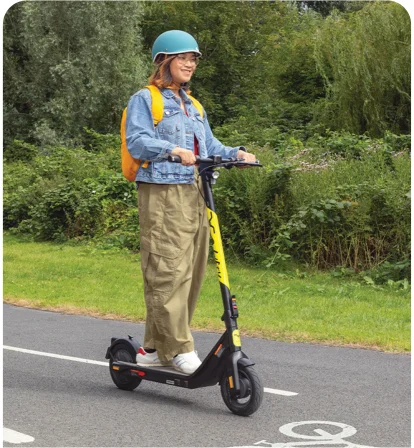
Figure from page 25
-
Integrate planning for mobility hubs into Metropolitan Area Transport Strategies and other relevant Plans
-
Implement promotional campaign(s) to support the uptake of shared mobility modes.
-
Develop brand identity for publicly built and procured shared mobility hubs
-
Prepare guidance for local authorities on the development of inclusive shared mobility hubs in line with universal design principles
-
Develop a data strategy for the usage and sharing of data with national and local authorities by all shared mobility providers operating in Ireland
These Policy Goals will be stepped out into more defined actions with measurable outputs in the next Sustainable Mobility Policy Action Plan.
- Work with shared mobility providers to promote safe usage of shared micromobility modes
In parallel and as outlined in more detail above in the section on ‘modified’ actions, the Department and the National Transport Authority (NTA) have been progressing a Mobility Hubs Pilot Programme, which will see the development of an initial network of shared mobility hubs across selected urban centres. These pilots will test different models of integration between shared bikes, e-scooters, car clubs, and public transport, with a view to informing a scalable national approach. The Pilot Programme will also explore how shared mobility can support broader policy objectives, including social inclusion, accessibility, and climate action. Following the submission of a Preliminary Business Case to the the Environment (DCEE) in 2024, the programme received approval in principle for support under the Climate Action Fund, which allowed for work to progress on the development of the next phase – the preparation of a Detailed Business Case (DBC). This was well advanced by the end of the period covered by this Report, with the expected DBC due to be finalised in Q4 2025 and procurement to follow thereafter.
-
Explore ways to support relevant small businesses and employment opportunities through the development of shared mobility hubs
-
Explore options for supporting the use of shared mobility hubs, with a particular focus on disadvantaged groups and micro-enterprises
-
Expand the provision of shared micromobility through shared mobility hubs in the Five Cities
10.Develop and test measures to support the uptake of shared mobility modes in different urban settings and examine how the State can effectively support the sustainable development of shared mobility services
11.Support research that tests the effectiveness and impact of shared mobility on a number of public policy areas including emissions reduction
12.Build on learnings from the NTA shared mobility hub pilot and other current shared mobility schemes, develop a detailed Shared Mobility Policy.
Other Relevant Developments
The new Programme for Government, which was published in January 2025, commits to implementing actions that optimise mobility, reduce congestion, and ensure that transportation works seamlessly for everyone. A multi-faceted approach is needed to achieve this.
to support a Just Transition by promoting the integration of demand management measures with complementary initiatives, such as enhancements to public transport services in both urban and rural areas, alongside the development of new active travel infrastructure. In doing so, it helps to maximise the impact of the Government’s investment in sustainable mobility solutions, as outlined in the Sustainable Mobility Policy (SMP).
Within this context, and as per Action 39 of the SMP, which committed to establishing a Demand Management Unit within the Department of Transport ‘to develop an approach to traffic demand management taking account of the recommendations of the Five Cities Demand Management Study’ and a later commitment in CAP23 to develop a new national demand management strategy, the Department published a draft strategy, called ‘Moving Together’, in April 2024. Over the period covered by this report, this draft was subject to extensive public consultation and stakeholder engagement.
Also of importance in the period covered by this report was the publication of the revised National Planning Framework, which emphasises the importance of Transport Oriented Development (TOD) in guiding future growth. TOD focuses on maximising housing, employment, services, and leisure spaces around high-frequency, high-quality public transport. This approach aims to create more sustainable and compact urban development patterns, contrasting with previous trends of urban sprawl. The increased emphasis on TOD in the revised NPF will reinforce efforts to meet related objectives under the SMP. The publication of the NPF will be followed by the development of the reviews of the statutory Regional Spatial and Economic Strategies by the three Regional Assemblies, and associated Metropolitan Area Strategic Plans for Dublin, Cork, Limerick-Shannon, Galway and Waterford, all of which will have a significant impact on sustainable mobility and TOD.
Naturally, there is a strong overlap between this new strategy and the SMP. Supply and demand-side measures are mutually dependent and reinforcing – climate and sustainable mobility targets will not be achieved without both.
The new Moving Together strategy recommends a variety of measures that seek to trigger a cultural and behavioural shift in the way people and business engage with travel and transport. It is a call for collective action across Government and society not only to help reduce carbon emissions from transport over the medium to long term, but also to address the more immediate issues of congestion, road safety and air quality. The Moving Together strategy, which is expected to be brought to Government for consideration in the coming months, also aims
Finally, a revised National Development Plan was published in July 2025 on foot of a commitment in the new Programme for Government. The levels of investment envisaged for transport will be critical to determining the level of ambition and scope of the new SMP Action Plan.
Looking Ahead – SMP Action Plan 2026-2030
The current SMP Action Plan sets out actions to be delivered by the end of 2025. The Programme for Government 2025 committed to the development of a successor Plan with the objective of promoting sustainable mobility and transport-orientated development to address congestion, improve air quality and reduce noise, and to enhance the attractiveness and accessibility of cities, neighbourhoods and town centres.
town centres. An increased emphasis will also be placed on new sustainable mobility options, including shared mobility, and the effective use of data and technology to enhance sustainable mobility options.
Work to develop the new Action Plan is well underway, and will be informed by an extensive series of engagement with stakeholders, which commenced with the National Sustainable Mobility Forum stakeholder events detailed above and will continue over the course of the year through events like the upcoming National Youth Assembly on Transport. The financial parameters for the next Action Plan have been largely determined by the outcome of the NDP review and reflect the Government’s commitment to ongoing investment in sustainable mobility.
The new Plan will play a critical role in contributing to Ireland’s legally binding target of halving transport emissions by 2030 (relative to 2018). In line with the Avoid-Shift- Improve approach to decarbonising transport that is set out in the SMP and reaffirmed in CAP23, the new Action Plan will support the ‘Shift’ towards sustainable modes through public transport and active travel investment, while the ‘Moving Together’ strategy will fulfil the ‘Avoid’ component of the framework by changing embedded travel behaviours and reducing vehicle kilometres travelled. The ‘Improve’ element will be satisfied through initiatives like the EV Infrastructure Charging Strategy and the Renewable Transport Fuels Policy.
Figure from page 27
However, as outlined in the Programme for Government, the new Action Plan will also strive to take a holistic perspective on sustainable mobility, recognising and reinforcing the societal, health and wellbeing benefits of a high-quality, affordable and reliable network of walking, cycling and public transport infrastructure. It is intended that the new Plan will put an increased focus on access to sustainable mobility in all its forms – for people with disabilities, those living in regional and rural areas, those travelling within and between our cities, and those living in new housing developments or within revitalised
Pages 24–27 · View in original PDF