1.4 Stakeholder and Public Engagement
1.4Stakeholder and Public Engagement
Proactive and early engagement with stakeholders is a vital aspect of strategic transport planning and has a significant influence on the success of project delivery. The approach taken to stakeholder management in developing the NCN Plan was based on the five steps illustrated in Figure 1.4.
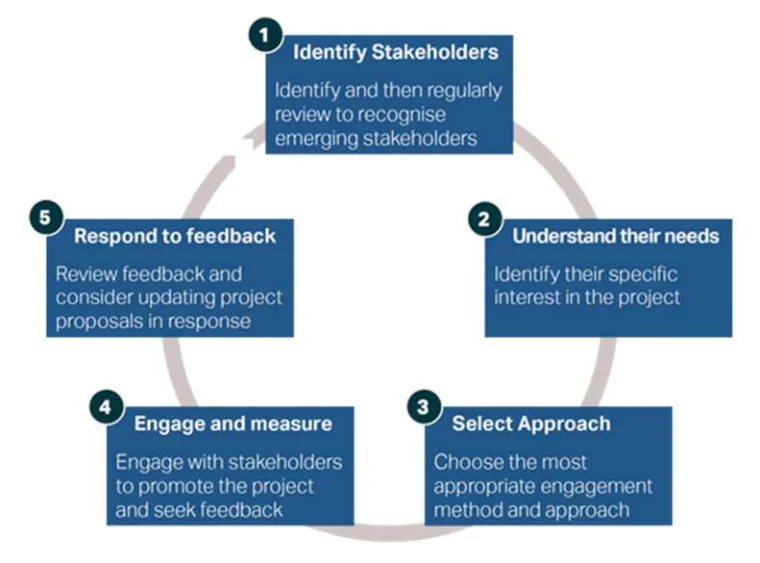
Figure 1.4: Approach to Stakeholder Engagement
Stakeholder Mapping
Stakeholder mapping incorporates steps one and two above. Following the identification of appropriate stakeholders, their respective needs were catalogued within a stakeholder register. Stakeholders were categorised as shown in Table 1.3 to reflect the different levels of engagement, as follows:
Delivery partners – These stakeholders will be instrumental in the development of the NCN through direct approval, funding, oversight and/or implementation. These stakeholders are included in the project governance structure and were engaged in monthly meetings.
Note: The Department of Transport was represented in both the Project Board and the Advisory Group. Due to its role in funding the NCN and developing various active travel policies, it was both the Project Approver and a Delivery Partner.
Engaged parties – These stakeholders had a specific role or interest in the development of cycling infrastructure and were critically important in developing the plan. Engagement commenced during the data collection phase of the project through stakeholder workshops and continued throughout the project. Engagement with this group initially focused on sharing approaches to project delivery and project objectives, as well as receiving data and information regarding existing and planned cycle and other relevant infrastructure from stakeholders. A series of workshops were also held during the network development phase of the project to solicit input and feedback at key stages (see Section 4, Network Development for further information regarding these workshops).
Interested parties – These stakeholders were identified as having an interest in the outcome of the NCN Plan and cycle infrastructure in Ireland more broadly. Engagement was primarily done during Stage 4 Public Consultation, via written notifications and submissions.
National Cycle Network Plan
General public – This group includes all other audiences who may be users of the infrastructure or have an interest in how the NCN will be delivered. Engagement with the public was focused on Stage 4 Public Consultation.
Table 1.3: Stakeholder Classification
| Type | Organisation | |||||
|---|---|---|---|---|---|---|
| Delivery Partners | Dept. of Transport | County and City Management Association (CCMA) | ||||
| National Transport Authority (NTA) | ||||||
| Engaged Parties | Fáilte Ireland | Cycle user groups (via cyclist.ie) | ||||
| Waterways Ireland | Cycling Ireland | |||||
| Irish Rail | Cara Sport Inclusion Ireland | |||||
| Sport Ireland | ||||||
| Interested Parties | Coillte | An Taisce | ||||
| Office of Public Works (OPW) | Road Safety Authority (RSA) | |||||
| Dept. of Education | Chambers of Commerce | |||||
| Environmental Protection Agency (EPA) | Greenways Ireland | |||||
| Disability Federation of Ireland | Eurovelo | |||||
| Bus Éireann | Health Service Executive (HSE) |
Stakeholder Engagement
Stakeholder engagement incorporates steps three and four outlined in Figure 1.4. Different approaches to engagement were used with different groups and at different stages, as follows:
Project governance – All three Delivery Partners (DoT, NTA and CCMA) were represented on the NCN Advisory Group and were actively involved in project reviews via regular, scheduled meetings.
1-to-1 virtual meetings – Included both regularly scheduled meetings with key Delivery Partners and ad hoc meetings to discuss project details as needed. They also provided project updates and solicited input and feedback with Engaged Parties.
Website – Used for public consultation to communicate project objectives, approach and proposed network, as well as other general information regarding the Plan.
Presentations – Used to promote the NCN website during public consultation.
Written submissions / Structured questionnaire – Used to engage Interested Parties and the general public and to solicit input and gather feedback during the public consultation.
A summary of the outcome of the stakeholder engagement activities undertaken over the course of the project is provided below:
Stage 1: Planning involved initial engagement with stakeholders and programme commencement. This clarified the objectives of the project amongst stakeholders and helped establish the mechanisms for further engagement throughout the development of the Plan. This stage also defined the inputs required from the various stakeholders and when this information will be required.
Stage 2: Data Collection focused on collating information to help develop further the inventory of the existing and planned infrastructure. This engagement was used to develop a comprehensive understanding of the issues and opportunities as they relate to existing and future cycling infrastructure in Ireland and gain feedback on the selected nodes that the NCN aims to connect.
Stage 3: Options Development and Assessment focused on gaining feedback on the Plan’s development of the proposed NCN corridors. Stakeholders provided input to the emerging network
National Cycle Network Plan
at key stages of development in advance of the public consultation: Defining destinations and developing corridors.
Stage 4: Public Consultation was facilitated through an online platform with widespread publicising of the draft Plan and consultation period through the Department of Transport’s media channels. The consultation period was open for a period of five weeks after which analysis of the feedback was undertaken.
Public Consultation
A comprehensive public consultation for the NCN Plan was developed to give members of the public and other interested parties an opportunity to provide feedback on the proposed network.
The consultation was conducted online through an interactive website which included detailed information on the plan objectives, methodology and proposed network. It also included an online survey with the opportunity to provide open feedback / comments.
The consultation period lasted for over one month, from May 4th until Jun 7th, 2022 (inclusive). During that period 21,000 views of the website were registered from over 9,000 unique visitors.
TII and the DoT issued a press release through their websites inviting participation in the consultation and also promoted the public consultation via a social media campaign throughout the public consultation period. Newspapers and online media sites published numerous articles regarding the launch of the public consultation. Other stakeholders also promoted the public consultation – in particular, Cyclist.ie notified its members. All actions assisted in increasing awareness of the website and public consultation.
The public consultation website presented the proposed NCN via an interactive map and also detailed the NCN vision statement and project objectives, as well as various other elements of the project. It included a feedback survey that consisted of eight questions regarding cycling behaviour, infrastructure preferences, alignment of the proposed NCN with project objectives, potential use of the NCN, as well as general feedback on the proposed Plan and the associated SEA Environmental Report (available in Appendix G).
The number of online submissions received was over 1,350. The conversion rate of approximately 15% (percentage of unique visitors who left a submission) was relatively high (industry average is approximately 7%) and reflects a reasonable level of engagement by visitors to the website regarding the proposed NCN Plan.
Written submissions were also received (both by post and email) from 38 different entities ranging from individuals and private companies to interest groups and defined stakeholders.
1.5Environmental Assessment
Environmental matters are integral to development and delivery of the NCN Plan. In addition to incorporating environmental matters and biodiversity in the network objectives and development, both a Strategic Environmental Assessment (SEA) and an Appropriate Assessment (AA) of the plan were undertaken.
The SEA is a process for the formal, systematic evaluation of the likely significant environmental effects of implementing a plan or programme, before a decision is made to adopt the plan or programme. The assessment provides for a high level of protection of the environment and contributes to the integration of environmental considerations into the preparation and adoption of plans. To determine whether a full SEA is required, an SEA Screening Report is prepared at the early stages of development of plans or programmes.
An AA is an assessment of the potential adverse effects of a plan or project (in combination with other plans or projects) on the Natura 2000 network of European sites, i.e. Special Areas of Conservation
National Cycle Network Plan
(SACs) and Special Protection Areas (SPAs). To test whether AA is required for a particular plan or project, an AA screening is first undertaken. Its purpose is to determine, on the basis of a preliminary assessment and objective criteria, whether a plan or project, alone and in combination with other plans or projects, could have significant effects on a European site in view of the site’s conservation objectives. Where significant effects are likely, uncertain or unknown at this screening stage, a Natura Impact Statement (NIS) is prepared.
Both assessments were prepared and submitted to the relevant authorities for review as part of a public consultation process and the proposed NCN was updated based on the feedback received. The various Environmental Reports are provided in the following appendices:
Appendix F: SEA Screening Report.
Appendix G: SEA Environmental Report.
Appendix H: SEA Adoption Statement.
Appendix I: Natura Impact Statement.
Pages 19–22 · View in original PDF