International Transport Forum (ITF) Decarbonising Transport Initiative
International Transport Forum (ITF) Decarbonising Transport Initiative
The work of the sub-groups associated with this Strategy was guided, in some part, by the Decarbonising Transport initiative developed by the International Transport Forum (ITF) Decarbonisation and the Pricing of Road Transport. This initiative was developed with the specific purpose of providing decision makers with tools to select CO2 mitigation measures that deliver on their climate commitment and to help government and industry translate climate ambitions into actions. Specifically, it created a catalogue of effective CO2 mitigation measures known as the Transport Climate Action Directory. This Directory was used as a springboard for discussion at the sub-group meetings.
It is well known in the first instance that the high rate of car usage in cities results in many negative impacts.
Based on the above, the Study explored how best to:
In addition to the above, the ITF Outlook 2023 reinforced the need for a mix of policies to promote sustainable choices in different contexts. It asserted that demand for passenger and freight transport will continue to grow in the coming decades across all world regions, in all scenarios.
ᴏ Manage vehicular traffic congestion.
ᴏ Reduce GHG emissions from road traffic.
ᴏ Address air quality issues due to vehicular traffic emissions.
ᴏ Improve the quality of the urban environment.
Without appropriate policies, unmanaged growth could result in increased urban sprawl, longer average trip distances and a lack of any meaningful emission reductions.
The Study recommended three priority Tier 1 measures. These were:
- 15 Minute Neighbourhoods.
This Strategy has been informed by the ITF Outlook, which encourages decision makers to:
- Enhanced Delivery of the National Planning Framework (NPF).
ᴏ Take a long-term view of urban development and adopt integrated approaches to transport and land-use planning to avoid future sprawl in growing cities.
- Public Parking Controls
ᴏ Adopt holistic sustainable urban transport plans that combine investment, pricing and access or space restrictions to encourage sustainable choices.
ᴏ Support multimodal and sustainable transport networks.
ᴏ Combine pricing measures in a coherent manner and allocate funds to sustainable modes.
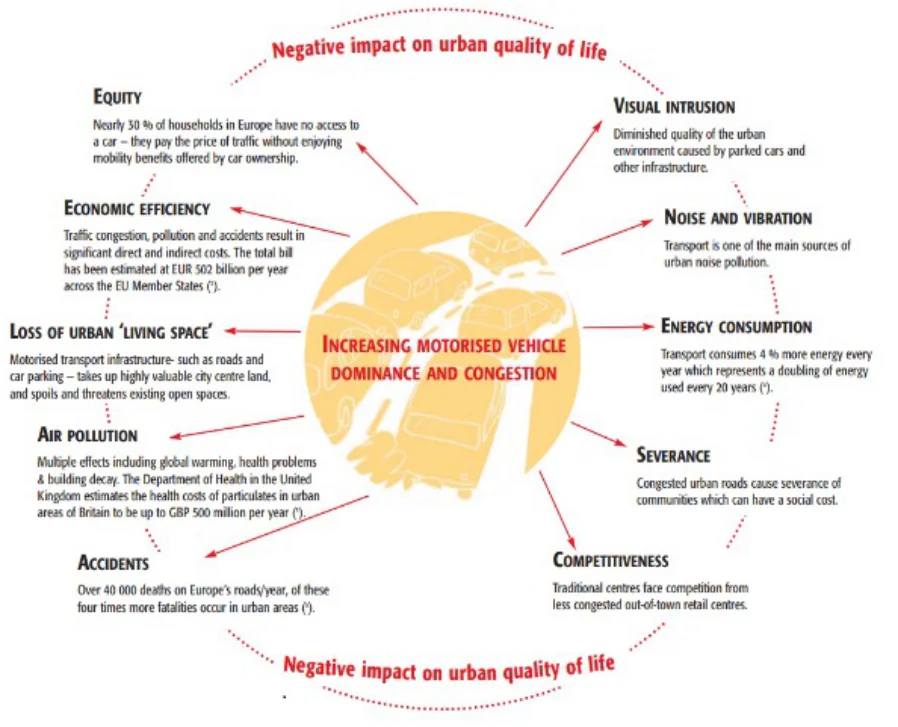
Figure 13: The main problems associated with increasing urban traffic and congestion
Pages 69–70 · View in original PDF