6 Industry
In 2025, industrial emissions accounted for 11% of Ireland’s total emissions.
Manufacturing combustion and industrial processes are the key emission sources in this
sector. Industry emissions are largely affected by cement production in Ireland, which in
turn are impacted by economic cycles. Manufacturing combustion emissions decreased
by 3.9% in 2025 due to declines in coal, oil and natural gas use in industry and renewable
fuel use increasing by 7.9%. Total emissions from the cement sector decreased by 3.6%
in 2025, though remain 44.6% higher than in 2011 during the economic recession.
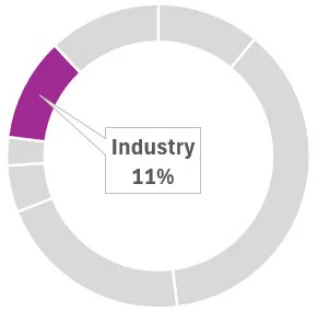
Figure 9: Industry sector emissions share in 2025
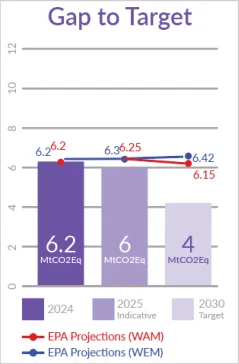
Figure 10: Gap to Target - Industry
Similar to electricity, industry emissions are
principally governed under the Emissions
In 2025, Irish manufacturing industry
Trading System (ETS) at EU level. Launched
emissions under the ETS decreased by 2.5%
in 2005, the ETS represents the world’s first
driven by the increased use of lower carbon
carbon market and remains one of the
fuels and a decrease in clinker production in
largest operating globally. The cap-and-
cement.
trade design ensures that polluting
There is 1 Legacy Industry Action, which
industries internalise the cost of carbon by
continues to be delayed. This action
requiring them pay for each ton that they
concerns the consideration of Carbon
emit under a progressively decreasing ‘cap’
Capture Utilisation and Storage (CCUS) in
or limit set on the total amount of GHG that
Ireland. A vision statement is being prepared
can be emitted by those covered in the
with a likely publication date of Q4 this year.
system.
(see case study).

Figure from page 18
Page 18 · View in original PDF