2 Agriculture
2Agriculture
Agriculture was responsible for 35% of national emissions in 2023 (percentage of total
emissions, including LULUCF), making it the largest GHG emitting sector in Ireland. This
figure excludes additional agriculture-related emissions from grasslands used for farming
which is accounted for in the LULUCF sector. In 2023, agricultural emissions decreased
to 20.7 MtCO2eq, driven by reductions in fertiliser use, liming and decreased milk
production due to poor weather and grazing conditions.
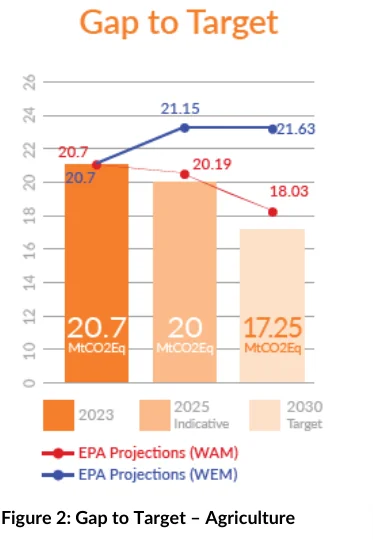
Figure from page 7
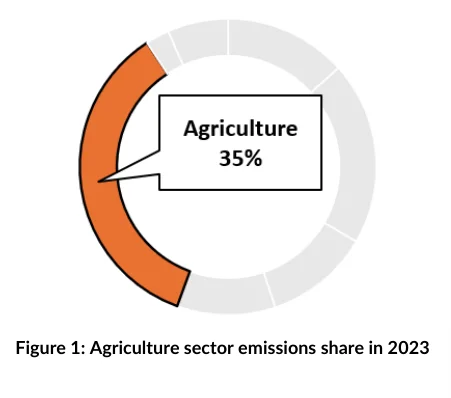
Figure from page 7
Figure 1: Agriculture sector emissions share in 2023
The Programme for Government makes key
commitments supporting a sustainable
transition in Agriculture including: reducing
Figure 2: Gap to Target – Agriculture
emissions and improving sustainability; helping
AgClimatise, and the Teagasc Marginal
farmers adopt practical measures to cut
Abatement Cost Curve (MACC) are applied.
emissions; offering sustainable income
Between 2018 and 2030, emissions could either
diversification options; promoting carbon-
rise by 1% or fall by as much as 16%. Projected
reducing activities like forestry planting; and
increase in the WEM scenario is a result of an
partnering with farmers and rural communities
increase in animal numbers and fertiliser use.
to embrace opportunities in energy efficiency,
Key strategies contributing to potential
renewables, and nature-based solutions.
reductions include restrictions on nitrogen
In the EPA projections, the total emissions from
fertiliser use, the adoption of alternative
the agriculture sector are expected to vary
fertilisers, and the incorporation of feed
significantly depending on how extensively the
additives for cattle.
measures outlined in the Climate Action Plan,

Figure from page 7
x
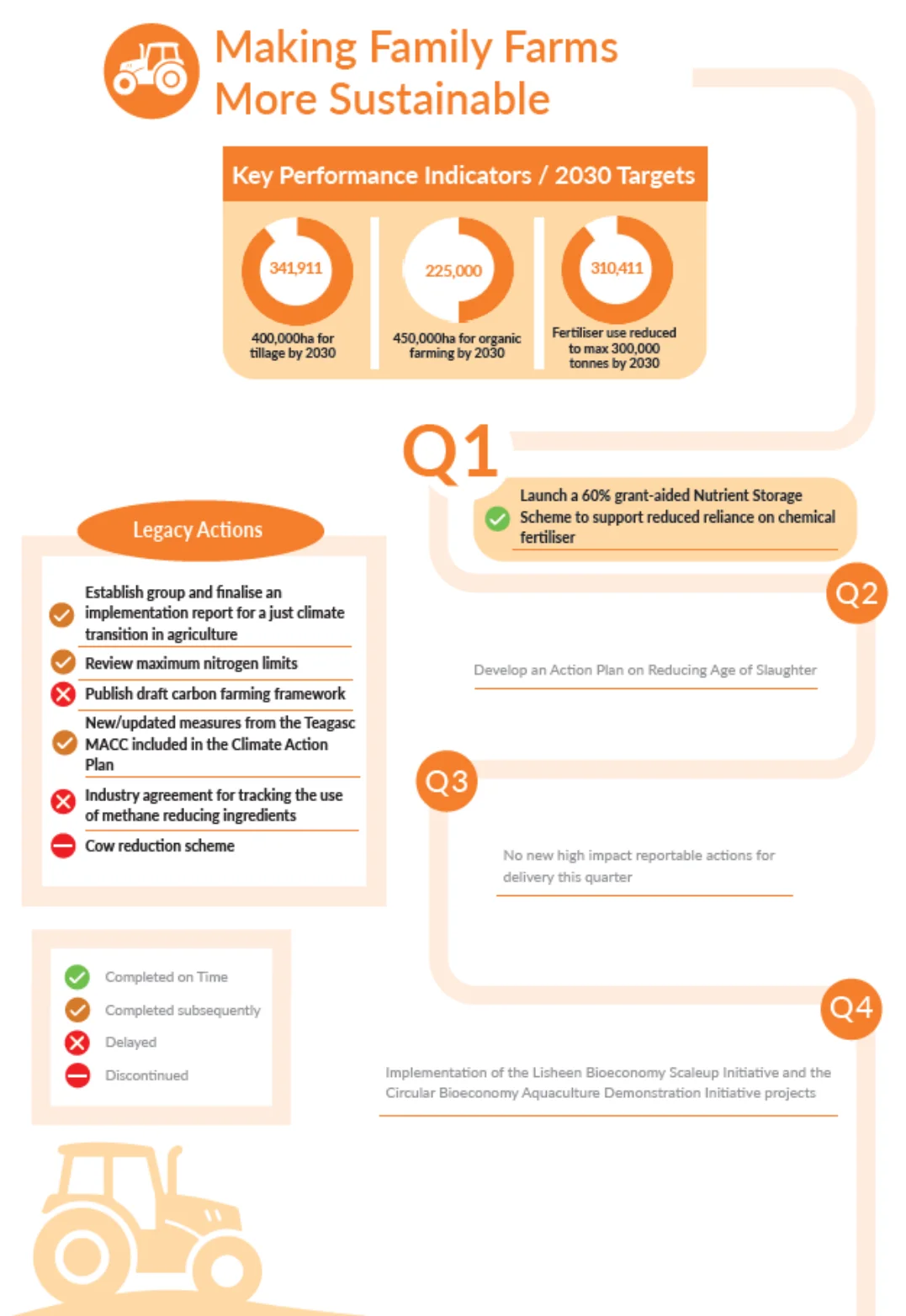
Figure from page 8
| Completed CAP25 Action AG/25/1 | ||
|---|---|---|
| Launch a 60% grant-aided Nutrient Storage Scheme to support reduced reliance on chemical | ||
| fertiliser | ||
| Under AG/25/1, DAFM launched a 60% grant-aided Nutrient Storage Scheme to support reduced reliance on chemical fertiliser. The Nutrient Importation Storage Scheme (NISS) will improve the production conditions on farms, improve competitiveness and contribute to the improvement of agricultural incomes and assist farmers for the storage of imported animal excreta, soiled water and other farmyard manures and related facilities. The Scheme is open to farmers with at least 5 hectares of owned, leased or rented lands which has been declared under the Basic Income Support for Sustainability (BISS) or equivalent in the year of application or preceding year, or in the case of intensive enterprises, generate a minimum of 20 production units from farming. The associated investment ceilings are €90,000 for individuals, €160,000 for Registered Farm Partnerships. It is a stand-alone scheme and does not impact other TAMS 3 investment limits; and multiple applications per tranche are allowed. |

Figure from page 9
Pages 7–9 · View in original PDF