4 Electricity
Energy industries (primarily electricity generation) accounted for 13% of national
emissions in 2023. Increases in renewable electricity (e.g. wind and solar) and reductions
in coal, oil, and peat use drive emissions reduction in the sector. In 2024, renewables
accounted for 40.1% of electricity generation in Ireland. CAP24 re-commits to achieving
80% of electricity demand from renewable sources by 2030.
| Figure 6: Gap to Target – Electricity |
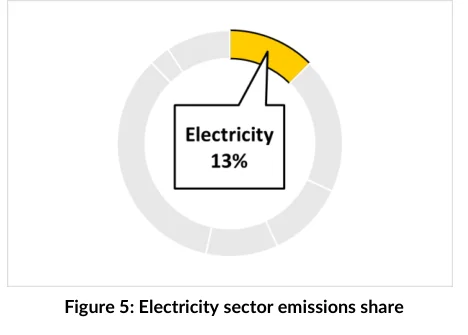
Figure from page 19
Figure 5: Electricity sector emissions share
The EPA projections show that increased renewable
the
generation, if delivered as rapidly and ambitiously as
EPA as required to accelerate the deployment of all
planned, can reduce energy industry emissions by 57-
renewables.
62% between 2022 and 2030 (Figure 6) and achieve
The EPA also warns that growing demand for
over 80% renewable electricity generation. Sectoral
electricity (e.g. from Large Energy Users and through
targets and emissions ceilings established for the
electrification of heat & transport) is putting pressure
sector are however projected to be missed, even in
on energy systems. Substantial challenges also
the higher ambition WAM scenario.
remain for hard-to-decarbonise sectors (e.g. high
CAP24 sets out plans to increase electricity
temperature heat users in industry that are not
interconnection, grid development, green hydrogen
suitable for electrification), with development of
and biomethane production, as well as demand side
low/zero carbon fuels needed to meet these
measures to further reduce emissions from the
applications.
electricity sector.
Negative emissions technologies will also be required
The 2024 EPA State of the Environment Report
for a climate-neutral Ireland according to the EPA, in
highlights the established technologies, such as wind
addition to abatement and reductions in fossil fuel
energy, solar photovoltaics and bioenergy that will be
use in the first instance. The high level of fossil fuel
key in meeting short-term emission reduction
subsidies in Ireland compared with renewable energy
targets. Significant growth in offshore wind is
subsidies (second highest amongst EU-27) is also
envisioned to be the essential element of longer-term
highlighted by the EPA as requiring urgent
energy systems. Enhanced support schemes,
intervention.
regulatory and planning frameworks are reported by
Figure from page 19
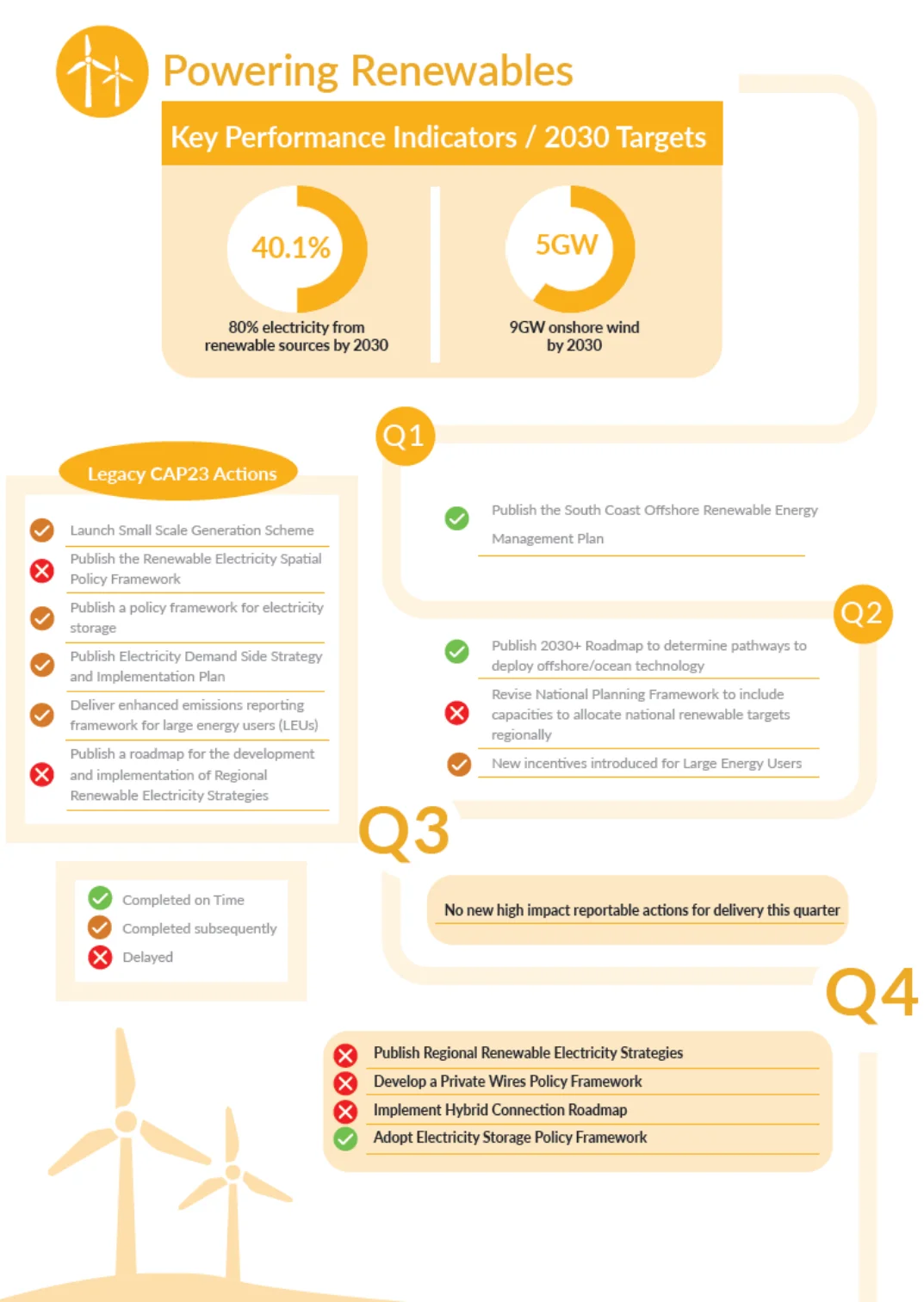
Figure from page 20
Electricity – Completed Legacy CAP23 Q3 Action
Did you know? UnderEL/23/24 of CAP23, DECC was due topublish an Electricity Demand Side
Strategy and Implementation Plan. This action completed in Q3 2024. The goal of the new
National Energy Demand Strategy (NEDS) is to support Ireland’s transition to net zero emissions
by 2050, ensuring a sustainable, reliable, and cost-efficient energy system. The strategy aims to
align electricity and gas demand with Ireland’s sectoral emissions ceilings and enhance demand
flexibility in line with Climate Action Plan commitments.
What’s new? The Commission for Regulation of Utilities (CRU) published the NEDS Decision
Paper on 25 July 2024. It sets out a programme of time-bound actions to be carried out by the
CRU and System Operators EirGrid, ESB Networks, and Gas Networks Ireland. The delivery of
these actions will allow for the full range of energy system users to participate in a more flexible
energy system. This will facilitate the development of a more reliable, sustainable, and efficient
energy system, while also minimising costs for energy customers. A review and update to the
NEDS is anticipated for 2026/2027 to allow for further learning and progress.
Electricity - Delayed CAP24 Q3 (and Q4) Action
Did you know? Under EL/24/3, a revised National Planning Framework (NPF) was due to publish
in Q3. It was set to include capacities for the allocation of national renewable energy targets at
a regional level with the aim of informing local development plans, including the Regional
Renewable Electricity Strategies that were due in Q4 under EL/24/4. Revision of the NPF
continued to be delayed by the end of Q4, though a draft was published on 10 July for a 9-week
public consultation. On 5 November 2024, prior to the General Election being called,
Government agreed to publish a draft schedule of amendments to the First Revision to the NPF
arising from the consultation process. The new Government will now be required to approve a
final revised NPF which can then be submitted to the Houses of the Oireachtas for approval.
Why is it needed? A properly structured and resourced planning system is crucial for the delivery
of climate action and can work to either facilitate or hinder progress. The NPF (introduced in
- forms a crucial element of the Irish planning policy hierarchy, with its revision necessary
to account for more ambitious EU and national emissions reduction targets and energy
commitments (including, for example, direction on regional renewable energy installation).Once
finalised, the revised NPF will be incorporated into Regional Spatial and Economic Strategies and
City and County Development Plans, and will work to influence renewables development locally
including through the CAP24-committed Regional Renewable Electricity Strategies.
Pages 19–21 · View in original PDF