2 Agriculture
Agriculture was responsible for 34% of national emissions in 2023 (percentage of total
emissions, including LULUCF), making it the largest GHG emitting sector in Ireland. This
figure excludes additional agriculture-related emissions from grasslands used for farming
which is accounted for in the LULUCF sector. In 2023, agricultural emissions decreased
to 20.78 MtCO2eq, driven by reductions in fertiliser use, liming and decreased milk
| Figure 2: Gap to Target – Agriculture |
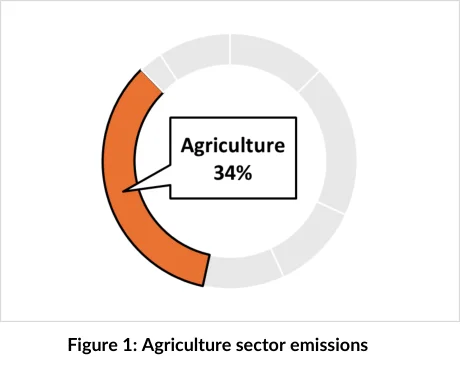
Figure from page 13
Figure 1: Agriculture sector emissions
GHGs from livestock are the biggest source of
sustainability targets across climate, air, water and
agricultural emissions in Ireland, largely from
biodiversity arenas. The report highlights the
producing beef and dairy. Emissions from livestock
dependency of the sector on a healthy environment
digestive processes (enteric fermentation) and
and that while many plans, programmes and positive
manure management accounted for 74.8% of Irish
actions exist and are being implemented at farm level,
agricultural GHGs in 2023.
“there is no clear evidence that the current measures
will collectively achieve the scale of environmental
In the EPA projections, agriculture emissions are
outcomes that are needed” (p273). Cross-agency
expected to decrease by 1 - 18% between 2022 and
collaboration will be key in achieving improved
2030, depending on the level of interventions
environmental performance and emissions
implemented (Figure 2). Reductions are expected
reductions in the agriculture sector.
from high rates of fertiliser switching, limits on
fertiliser use, and ambitious methane reduction
The ‘State of the Environment’ report concludes on
measures when implemented including new bovine
the urgency of a shared 2050 vision and a clear
feed additives. Sectoral targets for 2030 and the
sustainability pathway for agriculture, with adequate
agriculture SEC are nevertheless expected to be
supports put in place to achieve it. More robust
missed in both the EPA’s WEM and WAM scenarios.
evidence gathering to assess the environmental
outcomes of actions being taken is also seen as
The 2024 ‘State of the Environment’ report by the
crucial by the EPA.
EPA emphasises that the agricultural sector needs to
undergo urgent transformational change to meet

Figure from page 13
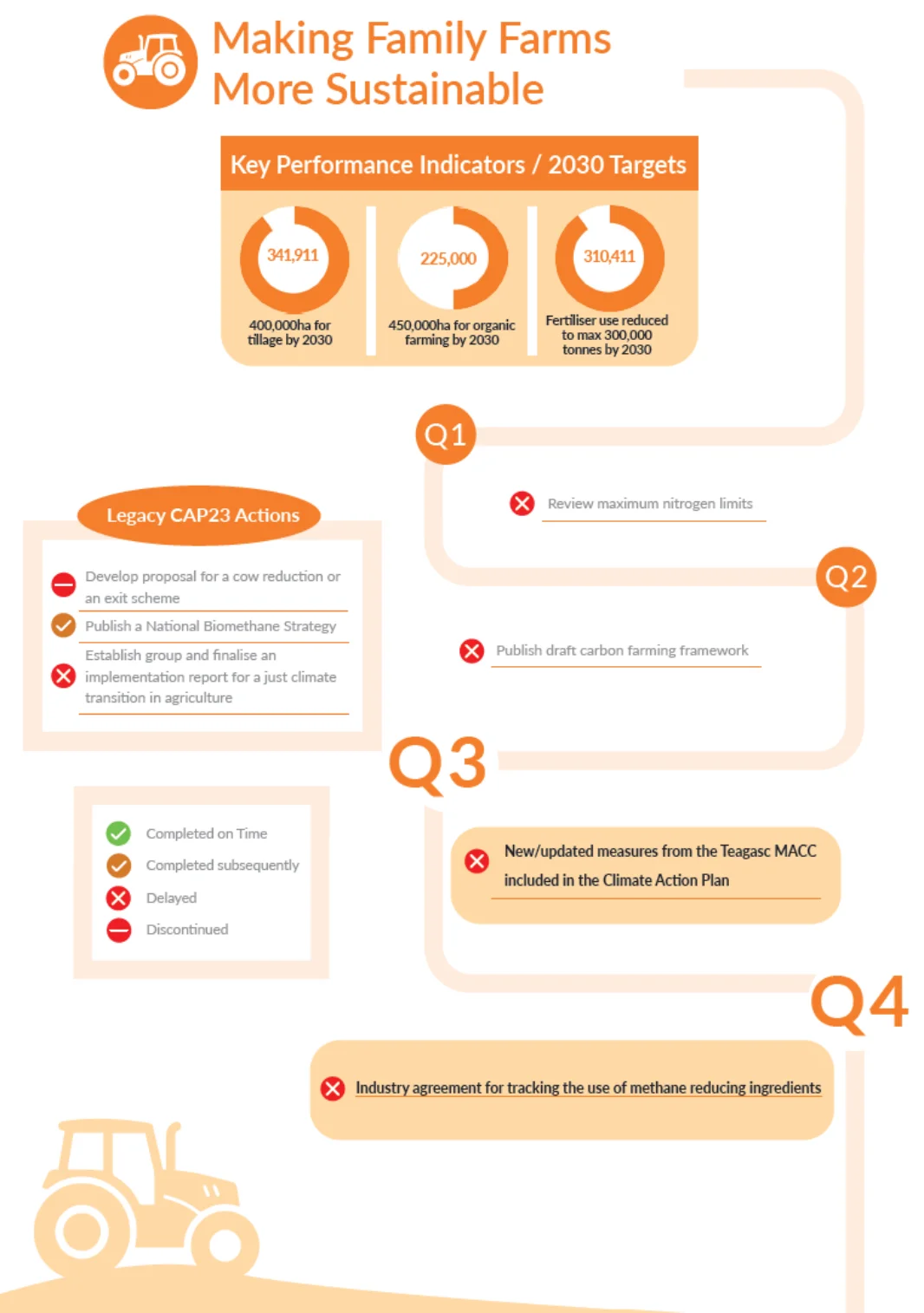
Figure from page 14
Agriculture – Delayed CAP24 Q2 Action
Did you know? A draft Carbon Farming Framework was due to publish for public consultation
in Q2 2024 under AG/24/26. This action, while delayed, has repositioned its timeline in line
with EU regulation publication. In December, the Carbon Removals and Carbon Farming (CRCF)
Regulation was published, establishing the first-ever EU-wide voluntary framework for
certifying carbon removals, carbon farming and carbon storage in products. The advanced draft
of the principles required for the development of an Irish carbon farming framework will publish
for consultation shortly. Consultation results will feed into the development of a National
Carbon Farming Framework, now anticipated for delivery by Q3 2025.
Why is it needed? With the correct methodologies, a successful carbon farming framework can
enable sustainable farming practices. It could facilitate, measure and ultimately reward farmers
for sequestering CO2 in soils, hedgerows and trees (‘carbon farming’) as well as for providing
other natural benefits such as air and water filtration, biodiversity and flood protection, and
climate regulation (‘ecosystem services’). The EU anticipate that carbon farming has the potential
to remove several hundred million tonnes of CO2 per annum by 2030 which will be critical to
achieving climate neutrality across Member States. Finalising a policy position on what carbon
farming could look like in Ireland is importantto progress to its implementation in practice.
Agriculture – Delayed CAP24 Q3 Action
Did you know? Under AG/24/10, DAFM were due to develop a detailed implementation plan
to translate the Teagasc 2023 Marginal Abatement Cost Curve (MACC) and incorporate new
actions into the Climate Action Plan. While some new actions from the MACC are drafted for
inclusion in CAP25, DECC did not publish this document by the end of Q4 due to the change in
Government. Provisional changes to the agricultural inventory in the EPA emissions projections
of July 2024 have also resulted in the need for additional work to complete this action. The
output of this will be incorporated into an updated emissions reduction pathway for the
agriculture sector, and will be incorporated into CAP26.
Why is it needed? A MACC visualises the GHG reduction potential of different mitigation
measures, and the relative costs associated with implementing each. The graph can help
policymakers make informed decisions about how to allocate resources for emissions
reductions, including the least costly ways to achieve targets. Teagasc published an updated
MACC in July 2023, with results highlighting the importance of maximising and accelerating
the adoption rate of known GHG mitigation measures including the age of cattle finishing, feed
additives, diversification, and fertiliser use/type. DAFM will continue to translate this best
available science into policies, actions and practical schemes for farmers to adopt these
necessary measures at pace.
x
Pages 13–15 · View in original PDF