8 Cross-cutting actions
Cross-cutting actions support the delivery of sectoral climate action through improvements in
governance, finance, planning, research, engagement, resilience, and leadership. Diverse
Departments and Agencies contribute to their completion, providing a whole-of-Government
response and enabling framework for national climate action. Information on all cross-cutting
actions due for reporting are contained in Appendix 1.
Amongst the cross-cutting activity pursued in
CCIM findings reflect the importance given to
CAP24, research is central to developing our
adaptation, citizen engagement, biodiversity
understanding of climate change, its consequences
protection and international action as cross-cutting
and possible mitigation solutions. Ireland continues
activities in CAP24.
to develop its climate research and innovation
Importantly, and linked to cross-cutting activity in
ecosystem and to build strong relationships with the
CAP24 on carbon pricing, over 90% of people in
European and global research community.
Ireland say that they support spending revenue from
Social and behavioural research provides insights into
the carbon tax on supporting further climate action.
human attitudes, perceptions and behaviours
This includes the development of clean energy
towards climate change, helping shape effective
sources (95%), improving Ireland’s transport
climate action policies and interventions. It helps to
infrastructure (95%), helping pay for energy
identify societal needs and gaps that technological,
efficiency improvements in low-income households
systemic and policy solutions can pursue, and to
(95%), funding programmes to help communities
examine any barriers to uptake, thus amplifying the
adapt to the impacts of climate change (91%) and
impact of all climate action.
assisting workers in the fossil fuel industry who may
lose their jobs (86%). These CCIM findings
Such research includes the EPA’s second ‘Climate
underscore not only the actions pursued in many
Change in the Irish Mind’ (CCIM) project, with survey
sectoral areas of CAP, but the importance of
results published earlier this year. The study found
achieving a Just Transition in Ireland, another area of
that 54% of residents think people in Ireland are
cross-cutting application in CAP24.
being harmed “right now” by climate change. In
contrast, only 4% think that climate change will
Examples of high impact cross-cutting actions
“never” harm people in Ireland. People are also most
completed and delayed so far in 2024 are provided
likely to think that future generations (95%), people
next. This in keeping with the approach followed in
in developing countries (93%), and plant and animal
sectoral chapters, signalling the importance of
species (92%) will be harmed by climate change. The
implementing activity in all enabling areas.

Figure from page 30
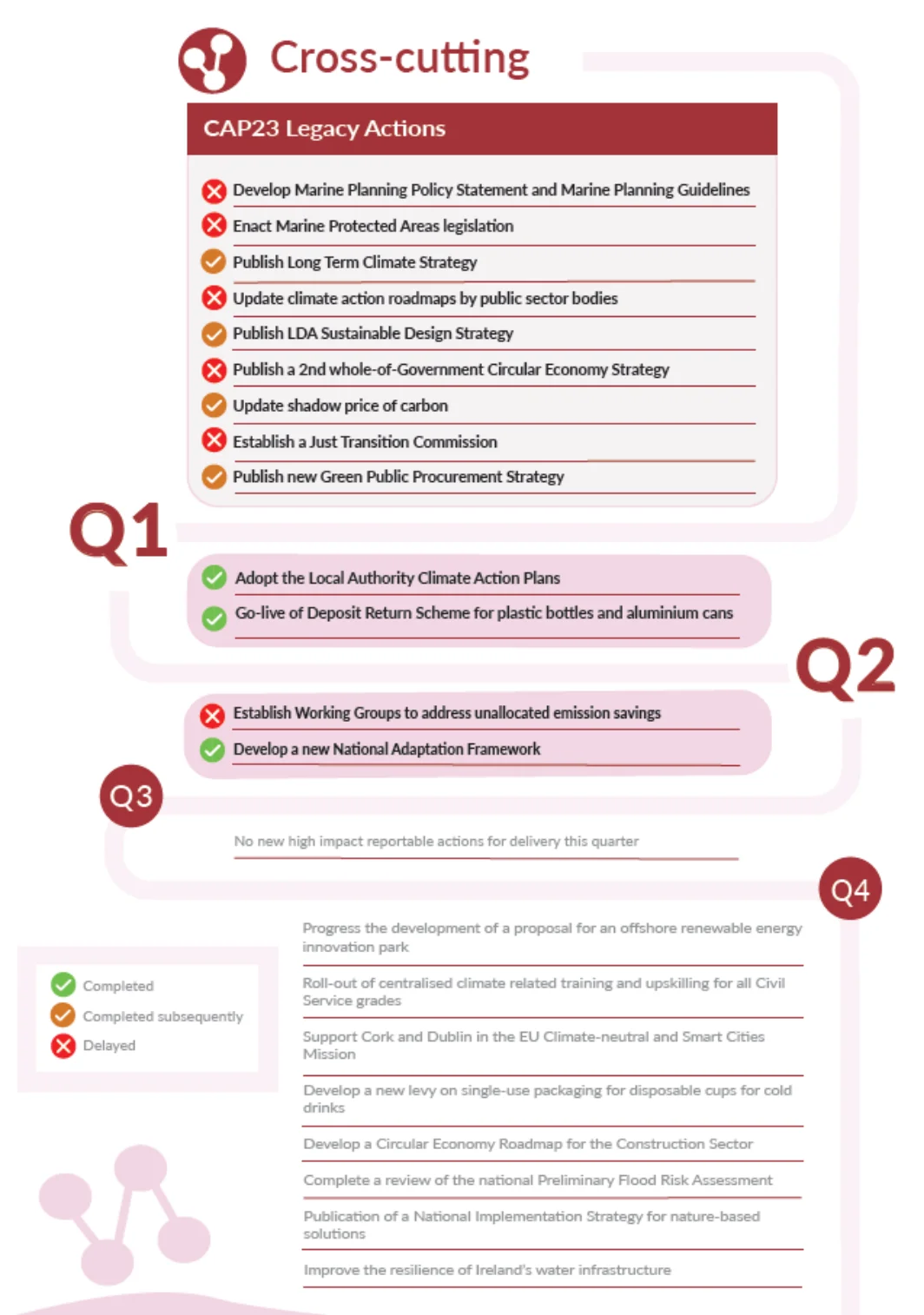
Figure from page 31
Cross-cutting - Complete CAP24 Action
Did You Know? Government policy is moving Ireland towards achieving a ‘circular economy’.
We cannot continue to ‘make, use and throw away’ in linear patterns of production and
consumption. Circularity means using our resources more sustainably and, by moving to a circular
economy, we can reduce material use. To date, over approximately 60% of plastic bottles and
cans are being collected for recycling through recycling bins, which means that the remainder are
not collected, leading to increased littering.
What’s new? Under Action CE/24/3, a new Deposit Return Scheme, overseen by Re-turn, was
launched on 1 February 2024 and incentivises the return of used drinks containers to be recycled
into new ones. By creating a closed loop recycling system, the scheme aims to boost recycling
rates in Ireland, whilst reducing the number of plastic bottles and aluminium cans being littered
and sent to landfill or incineration. Early indications from research by Irish Business Against Litter
show that can and plastic bottle litter has reduced significantly in towns and cities since the
introduction of the “Re-turn” scheme.Discarded cans are reported to have reduced by almost
30% and plastic bottle waste was less prevalent than in any previous survey.
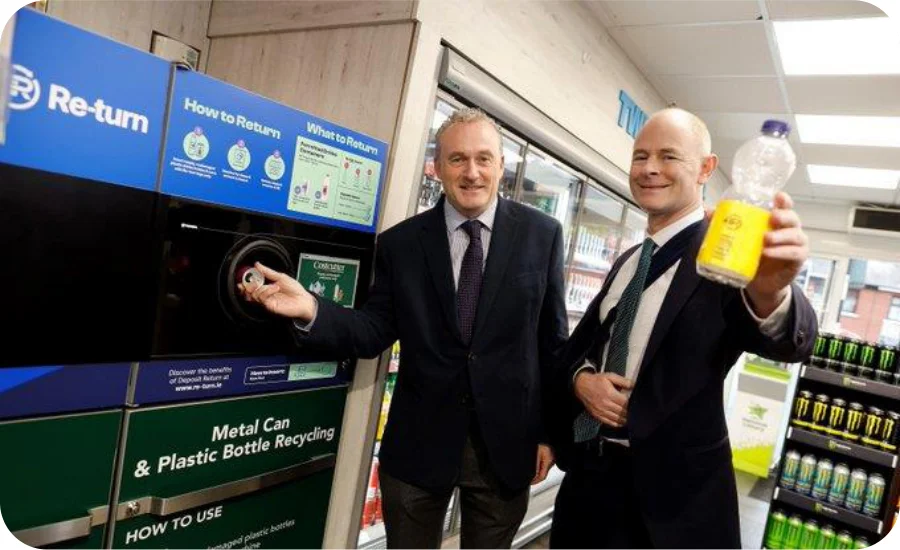
Figure 17 Minister Smyth welcomes launch of Deposit Return Scheme. Source: X

Figure 17 Minister Smyth welcomes launch of Deposit Return Scheme. Source: X
Cross-cutting - Complete CAP24 Action
Did You Know? Ireland’s Climate Action and Low Carbon Development (Amendment) Act (2021)
required each Local Authority to prepare a Local Authority Climate Action Plan to meet national
climate targets and develop resilience to the impacts of climate change. Local Authorities are key
drivers in advancing climate policy locally. Under CAP24 Action LG/24/1, Climate Action Plans
have now been adopted in all 31 Local Authorities.
What’s new? Completing local climate plans is an important milestone. Collectively, there are
almost 4,000 practical climate measures to be completed over the next five years. Eachclimate
plan is built on a strong evidence base, including likely climate change risks to their area and
Baseline Emissions Inventories for sectors locally. Each Local Authority is also responsible for
establishing a Decarbonising Zone (DZ). DZs are intended to be the focus for a range of climate
mitigation, adaptation and biodiversity measures and will help to identify projects which will
contribute to the delivery of the national climate objective.
Cross-cutting - Delayed CAP23 Legacy Action
Did You Know? AchievingIreland’s climate targets will require transformational change across
our economy and society. This transition must be fair, and just, and the costs must be shared
equitably. Originally due under CAP23, Action JT/23/1, Establish a Just Transition Commission, has
been subject to delays while a dedicated Taskforce scoped possible roles and structures for the
Commission.Government approval of its recommendations and to establish a Just Transition
Commission was secured in April 2024, with a recruitment campaign for members and a chair
expected shortly. It is expected that the Commission will commence its work in Q3 2024.
Why is it needed? A Just Transition Commission will provide advice to Government for the
development of fair and equitable climate policies. Developing a greener economy will not be
socially inclusive by default, and carefully crafted policies are needed to maximise opportunities
and cushion the cost of the transition for those who need it. People must also be equipped with
the skills to participate in new jobs of our future climate neutral economy, with continuous pre-
emptive workforce development required. For individuals, this may mean re-skilling and lifelong
learning to access and create future benefits.

Figure from page 33
Pages 30–33 · View in original PDF