4 Electricity
Energy industries (primarily power generation) accounted for 13% of national emissions
in 2023. Increases in renewable generation (e.g. wind and solar) and reductions in coal,
oil, and peat use drive emissions reduction in the sector. In 2023, renewables accounted
for 42% of electricity generation in Ireland, an increase from 38.6% in 2022. CAP24 re-
commits to achieving 80% of electricity demand from renewable sources by 2030.
| Figure 10: Gap to Target – Electricity |
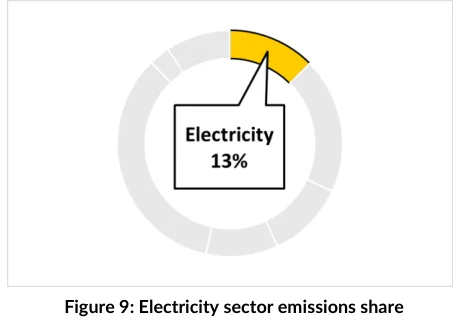
Figure from page 18
Figure 9: Electricity sector emissions share
The EPA projections show that increased renewable
generation, if delivered as rapidly as planned, can
The CCIM study published in Q1 shows strong
reduce energy industry emissions by 57-62%
support amongst Irish people for the development of
between 2022 and 2030 (Figure 10) and achieve over
renewable energy infrastructure to help the
80% renewable electricity generation. Sectoral
Government reach its renewable electricity target of
targets and emissions ceilings established for the
80% by 2030.82% of Irish people support building
sector are however projected to be missed, even in
new infrastructure such as pylons or substations in
the higher ambition WAM scenario.
their local area to support the increased use of
CAP24 sets out further policies and measures to help
renewable energy.
meet targets in the sector. This includes methods to
The electricity sector however continues to face
enable industries to participate in flexible demand
challenges, particularly given that the
initiatives and developing options to incentivise Long
decarbonisation of other sectors, including transport,
Duration Energy Storage. Increased interconnection,
heating, and industry, relies to a significant degree on
hydrogen, biomethane and demand side measures
enhanced electrification. This can create challenges
are all also envisaged to help reduce sectoral
for the grid as well as for energy security.
emissions from energy industries.
Dependency on coal use due to the unavailability of
sufficient gas-fired generation, slow infrastructure
delivery and planning delays also create risks to
established targets.

Figure from page 18
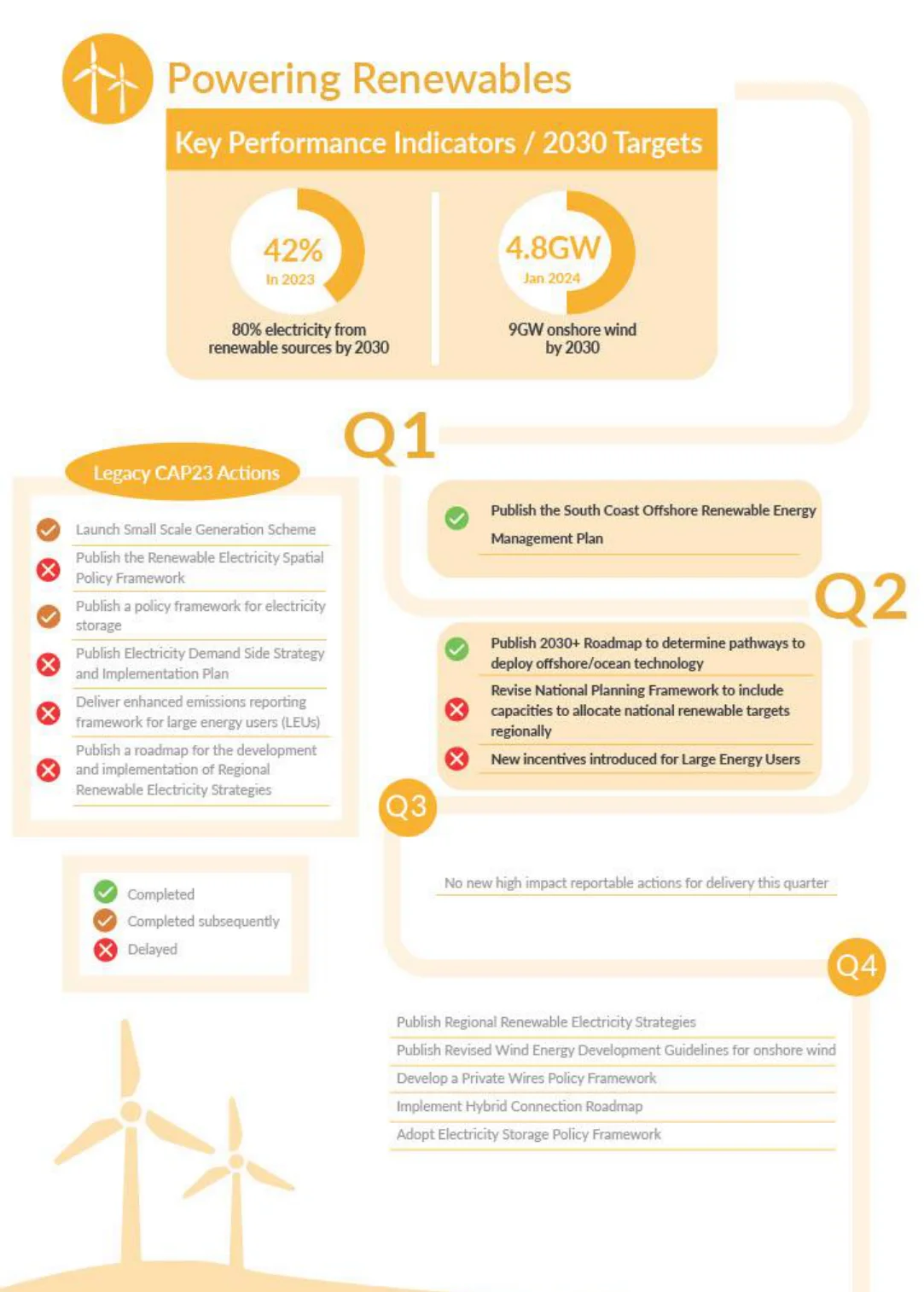
Figure from page 19
Electricity – Complete CAP24 Action
Did You Know? Under EL/24/17, the number of large fossil-fuel electricity generators that must
operate on Ireland’s grid has been reduced.EirGrid is now able to operate the grid with just four
large conventional fossil-fuelled generators (down from five) when there is sufficient power
available from renewable generators such as wind and solar. The new operational policy came
into place on 7 April 2024.
What’s new? The reduction in fossil fuel generators in the Republic of Ireland means that the all-
island electricity grid can now operate with seven large conventional fossil-fuelled generators in
total, four in the State (down from five) and three in Northern Ireland (unchanged). This is
important to facilitate higher levels of renewables on the system and reduce carbon emissions
from non-renewable generation that would otherwise use fossil fuels like coal, oil or gas. EirGrid
is aiming to further reduce the minimum requirement for conventional fossil-fuelled generation
over the coming years.
Electricity - Delayed CAP23 Legacy Action
Did You Know? CRU conducted an extensive public consultation in Q1 2024 to support the
development of a National Energy Demand Strategy and Implementation Plan. This is a legacy
action from CAP23 (EL/23/24) and, due to extended consultation timelines, is now expected to
finalise in Q3 2024.
Why is it needed? Reducing and managing the amount of energy consumed is a priority for
meeting carbon budgets. This can be achieved in multiple ways, including through improving
energy efficiencies and enhancing demand flexibilities for consumers. Demand flexibility allows
energy customers to optimise their use of renewable generation by shifting demand to periods
of low carbon intensity generation. The proposed strategy will thus lead to decarbonisation,
enhanced security of supply, and lower system costs, and is critical in the context of a growing
economy. CRU sought out specific, actionable short- and medium-term measures in the
consultation period, and completed the exercise in tandem with a consultation that reviewed
Large Energy Users Connection Policy given their significant impact in this area.

Figure from page 20
Pages 18–20 · View in original PDF