2 Agriculture
Agriculture is the largest GHG emitting sector in Ireland, responsible for 34% of national
emissions in 2023. In 2023, agricultural emissions decreased to 20.78 MtCO2eq, mostly
driven by reductions in fertiliser use and liming, as well as a reduction in overall cattle
numbers. When combined with additional agriculture-related emissions from grasslands
used for farming currently accounted for in LULUCF, agricultural activity accounts for
c.40% of total Irish emissions.
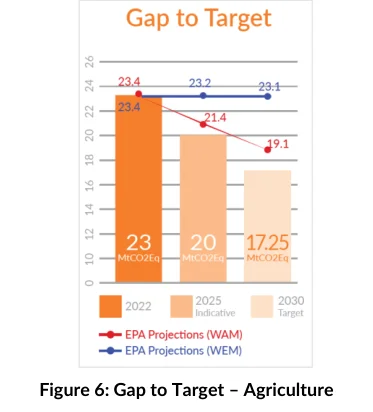
Figure from page 12
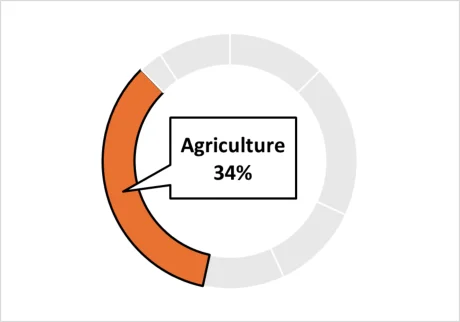
Figure 5: Agriculture sector emissions
Figure 6: Gap to Target – Agriculture
There is a recognition of the need for this change in
GHGs from livestock are the biggest source of
the EPA’s Climate Change in the Irish Mind (CCIM)
agricultural emissions in Ireland and largely originate
survey. However, only 30% of people in Ireland in this
from producing beef and dairy. Emissions from
survey correctly identified agriculture as Ireland’s
livestock digestive processes (enteric fermentation)
largest GHG source, indicating misunderstandings on
and manure management accounted for c.75% of
the impact of the sector.
Irish agricultural GHGs in 2022.
Diversification options for livestock farmers, such as
In the EPA projections, agriculture emissions are
switching to forestry, anaerobic digestion, organics
projected to decrease by 1 - 18% between 2022 and
and tillage are proposed in CAP24. Other
2030, depending on the level of interventions
diversification options in the bioeconomy and carbon
implemented (Figure 6). Reductions are expected
farming are also being progressed. These
from fertiliser switching, limits on fertiliser use and
diversification options were not included in the EPA
new bovine feed additives. Sectoral targets for 2030
projections due to a lack of clear implementation
and the agriculture SEC are expected to be missed in
pathways. CAP24 commits to devise new required
both WEM and WAM scenarios.
actions this year, in collaboration with stakeholders,
drawing on the 2023 Teagasc Marginal Abatement
The agricultural sector will need to undergo
Cost Curve as well as innovations from Climate-KIC’s
significant changes to meet 2030 and 2050 targets.
demonstrations.

Figure from page 12
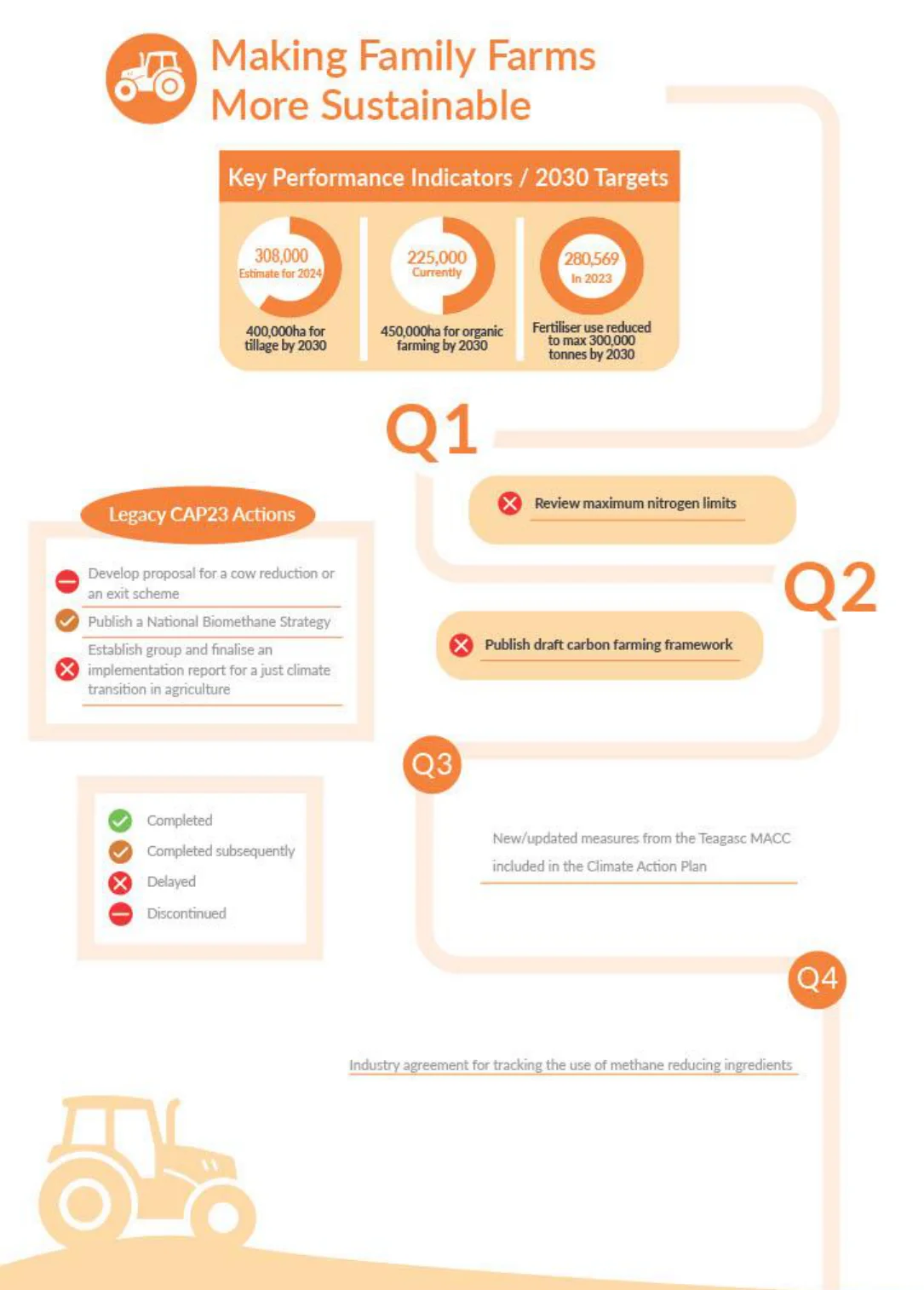
Figure from page 13
Agriculture - Complete CAP23 Legacy Action
Did You Know? In January 2024, a public consultation was initiated on a draft National
Biomethane Strategy. The consultation gathered input from stakeholders on proposed plans to
establish a biomethane industry in Ireland. The consultation closed in March after receiving 200
submissions. The final version of the National Biomethane Strategy published in May.
What’s new? A National Biomethane Strategy is key to scale up indigenously produced
biomethane to a target of 5.7 TWh per annum by 2030. This is equivalent to c.10% of Ireland’s
current overall gas demand. Biomethane will help to decarbonise this energy source and displace
fossil gas in many hard-to-decarbonise sectors. The contribution that biomethane could make to
gas supply in Ireland could also improve energy security, all the while providing an alternative
income for farmers to produce the inputs required (e.g. grass, slurry). The publication of Ireland’s
first National Biomethane Strategy also supports the CAP24 objective of providing land use
diversification options for livestock farmers.
Agriculture – Discontinued CAP23 Legacy Action
Did You Know? Meeting climate targets for agriculture will require transformational change.
CAP23 included an action to develop a proposal for a voluntary cow reduction or exit scheme
(AG/23/10). This proposal did not complete in the first half of 2024 under legacy CAP23 reporting,
with a decision taken by DAFM to no longer pursue this action.
There is a need to enhance the sustainability of agriculture across food production, climate
mitigation, resilience, and energy production. CAP24 re-commits to mobilising recommendations
arising from the Food Vision sectoral groupings, including to incentivise voluntary livestock
reductions. Livestock farmers will continue to be incentivised with diversification opportunities,
including, in organics, biomethane production, tillage, afforestation, and reducing management
intensity on drained organic soils.

Figure from page 14
Pages 12–14 · View in original PDF