1.1 Climate change news and activity in Q1 and Q2 2024
Figure from page 4
In 2023, the Earth experienced the joint warmest or second warmest year on record
depending on the data set as reported by the Copernicus climate change service. The
Copernicus Climate Change Service further reports that June 2024 was the thirteenth
month in a row to be the hottest on record. This was mirrored by an Irish climate report
from Met Eireann released earlier this year, which sets out how Ireland experienced a
number of record-breaking extremes in 2023, with rainfall and warming at
unprecedented levels at times. These reports underline the importance and urgency of
climate action, globally and in Ireland. This surge in temperatures is rapidly approaching
the 1.5°C limit set by the international Paris climate agreement.
Figure from page 4
The urgency to curb climate change by cutting greenhouse gas (GHG) emissions is
highlighted by the increasing severity of its impacts worldwide, including flooding,
wildfires, and extreme heat events. Climate scientists warn that the effects of a warmer
planet will continue to worsen without transformative change in planning decisions by
governments and businesses. The future climate is in our collective hands.

Figure from page 4
The latest EPA data shows that Ireland’s greenhouse gas emissions fell by 6.8% in 2023
(excluding LULUCF), compared with 2022. Reductions were seen in almost all sectors.
While this downward trend is very welcome, we need to further intensify our efforts to
drive emissions down at the scale and pace required to meet national and EU targets.
Climate Change in Europe
Figure from page 4
The first half of 2024 saw the first European
recommended reducing the EU’s net GHGs by
Climate Risk Assessment released by the EU
90% by 2040 relative to 1990. The EU is
Commission. It reported that Europe is
working towards an interim target of reducing
unprepared for the climate risks it faces,
GHGs by 55% by 2030 and climate neutrality by
including wildfires, extreme weather, and strain
2050 to address climate change.
on public finances. Heat stress, floods, coastal
The EU Environment Council’s approved the
ecosystems, and disaster recovery are the most
Nature Restoration Law in June. Ireland strongly
pressing concerns, with the inadequacy of
supported the law, which addresses climate and
current adaptation efforts emphasised.
nature crises which in turn strengthens food and
In February, the EU Commission presented its
water security, creates jobs, and supports rural
assessment of a 2040 climate target. It
economies.
Pricing Emissions
was completed in Q1. It outlines Ireland’s
plan to achieve 20GW of offshore wind by
Methane emissions received significant
2040 and at least 37GW by 2050, working
attention to date in 2024. In June, Denmark
to secure Ireland’s energy future, reduce
announced plans to introduce Europe’s first
GHGs, and boost economic growth.
carbon tax on agriculture. This tax aims to help
Ireland’s first National Biomethane Strategy
reduce beef and dairy production by taxing
was published in May. It aims to produce
emissions from livestock, thus incentivising
5.7TWh of biomethane by 2030 and
farmers to switch to less emission-intensive
emphasises the role of farmers in producing
activities including crops and pork production.
renewable energy. Capital grants and the
The Danish government is also set to provide
Renewable Heat Obligation will support
€5.3 billion to reforest agricultural land, set
industry growth.
aside carbon-rich lowland soil, and buy out
Ireland’s second National Adaptation
certain farms to reduce nitrogen emissions.
Framework (NAF) was published in June.
The Framework outlines a national strategy
Climate Change in the Irish Mind
for adaptation and emphasises future-
proofing local development. It mandates the
Figure from page 5
In Q1, the EPA published the second wave of its
creation of Adaptation Plans for specific
‘Climate Change in the Irish Mind’ (CCIM)
sectors. The Irish Fiscal Advisory Council
project. Findings show strong majority support
estimates that damage from extreme
for climate action amongst the Irish public. 87%
weather could cost €3 billion by 2030,
say that Ireland has responsibility to act on
highlighting the need for investment to
climate change and reduce GHGs. 9 in 10 say
reduce loss and build resilience.
that the issue of climate change is personally
As part of its 2024 Annual Review, the
important, with a large majority (79%) saying
Climate Change Advisory Council has so far
that climate change should be either a “very
published sectoral assessments of Ireland’s
high” or “high” priority for Government. Support
Electricity, Industry, Waste, Transport and
for specific sectoral policies is explored in
Built Environment sectors. The assessments
chapters throughout this Progress Report.
underscore the urgency of accelerating
renewable energy deployment, enhancing
Action in Ireland
technology investments in industry to
reduce emissions, improving waste
In addition to actions outlined in this Progress
management, undertaking planning and
Report, 2024 to date has seen additional climate
taxation reform for sustainable transport
initiatives in Ireland, including:
and scaling up efforts to replace fossil fuel
Policy Developments:
heating systems in buildings.
A consultation on the Offshore Renewable
Energy Future Framework Policy Statement
Funding:
A €60 million “Farming for Water” project
aimed at improving water quality was
H1 2024 saw the launch of a €27 million
initiated in March. The project will
fund forCommunity Climate Action. It will
implement targeted actions on farms to
support local projects aligned with national
enhance water quality and will also support
climate and energy targets in areas such as
nature conservation goals.
community energy, travel, food, waste,
In July, the Future Ireland Fund and
shopping, and local environmental action.
Infrastructure, Climate and Nature Fund
The Government also allocated €72 million
were established by the Minister for
to Local Authorities for 70 Greenway
Finance: the Future Ireland Fund aimed at
projects, including completion of the
addressing financial pressures associated
Limerick and Waterford Greenways.
with climate change and other economic
In February, a €21 million grant scheme was
challenges; and the Infrastructure, Climate
launched to develop high-powered Electric
and Nature Fund providing resources for
Vehicle (EV) charging infrastructure across
climate change, nature, water quality, and
Ireland’s road network.
biodiversity objectives.
The Native Woodland Conservation
Communication and Education:
scheme waslaunched in early 2024. It
supports the restoration, conservation, and
Schools had the opportunity to apply to be
enhancement of existing native woodlands,
part of the first phase offering two new
which play a crucial role in biodiversity, soil
Senior Cycle subjects including Climate
and water quality, and climate mitigation.
Action and Sustainable Development.
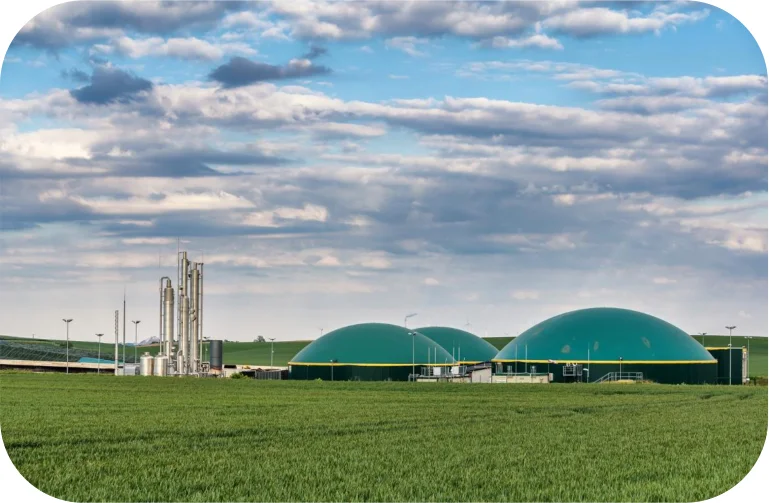
Figure 1: A National Biomethane Strategy published in May 2024
Climate Conversations 2024 launched in
Q2. People and communities are invited to
Figure from page 7
on how we can
collaboratively achieve the transition to a
competitive, low carbon, climate-resilient
and environmentally sustainable economy.
published DECC report,
highlights the barriers people experience in
taking climate action, providing insights into
the “attitude behaviour gap” that can help
shape better climate policy and public
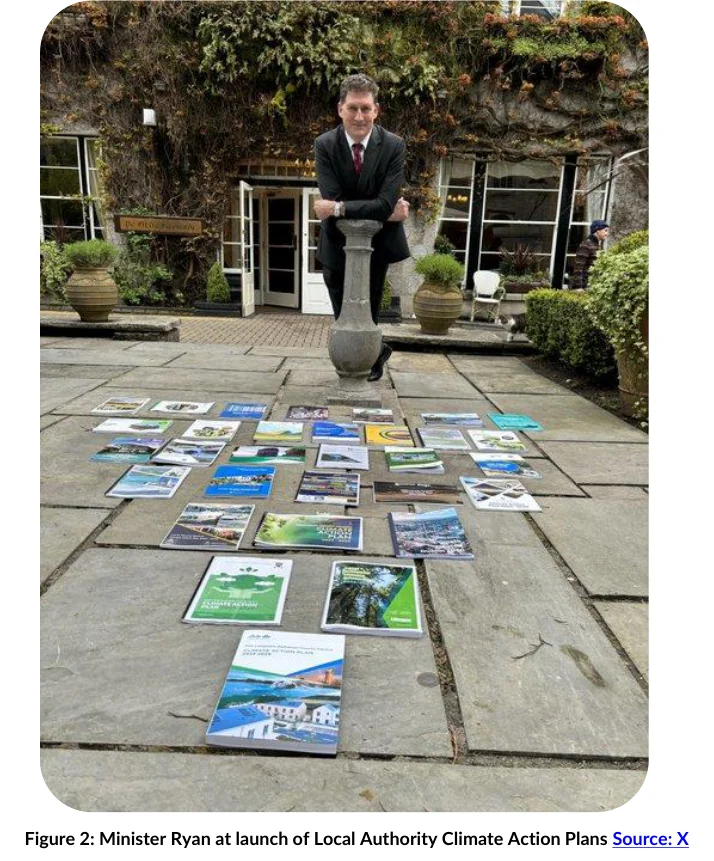
Figure from page 7
Figure 2: Minister Ryan at launch of Local Authority Climate Action Plans Source: X
Pages 4–7 · View in original PDF