4 Electricity
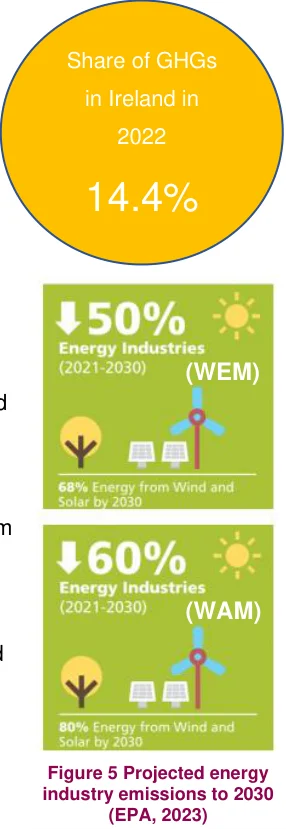
Figure from page 16
Share of GHGs
Energy industries (primarily power generation) accounted for 14.4% of
in Ireland in
national emissions in 2022. Renewables accounted for 39% of electricity
2022
generated in 2022, a 4% increase on the previous year.
14.4%
In its projections released this quarter, the EPA report that increased
renewable energy generation from wind and solar, if delivered rapidly as
planned, can reduce energy industry emissions by 50-60% and achieve
over 80% renewable electricity generation by 2030 (Figures 5 and 6).
Increased interconnection, storage and biomethane are also envisaged to
(WEM)
contribute to reduced sectoral emissions, though the sector is still predicted
to breach its sectoral targets and SEC.
Continued dependency on coal use due to unavailability of sufficient gas-
fired generation creates risks to targets, along with energy risks arising from
recent geopolitical events and the slow implementation of renewable
electricity infrastructure.
(WAM)
The EPA was unable to model the full 2GW target for new flexible gas fired
generation targeted in CAP23, though report that the targeted 80%
renewables share could be achieved with lesser GW targets across key
renewables areas. Hydrogen generation post-2030 and demand side
Figure 5 Projected energy industry emissions to 2030
measures to mitigate growth from large energy users were also not
(EPA, 2023)
included in the projections due to a lack of clear implementation pathways.
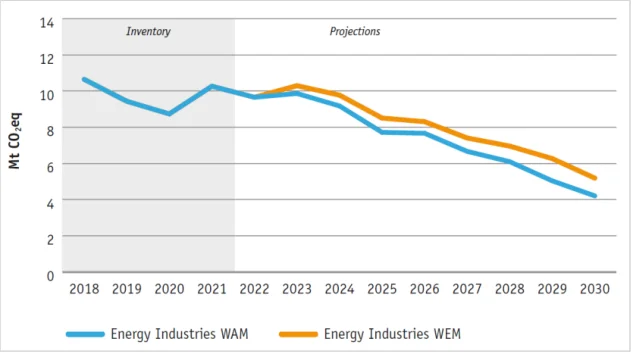
Figure 6 Emissions projections for energy industries, 2018 - 2030 (EPA, 2023)
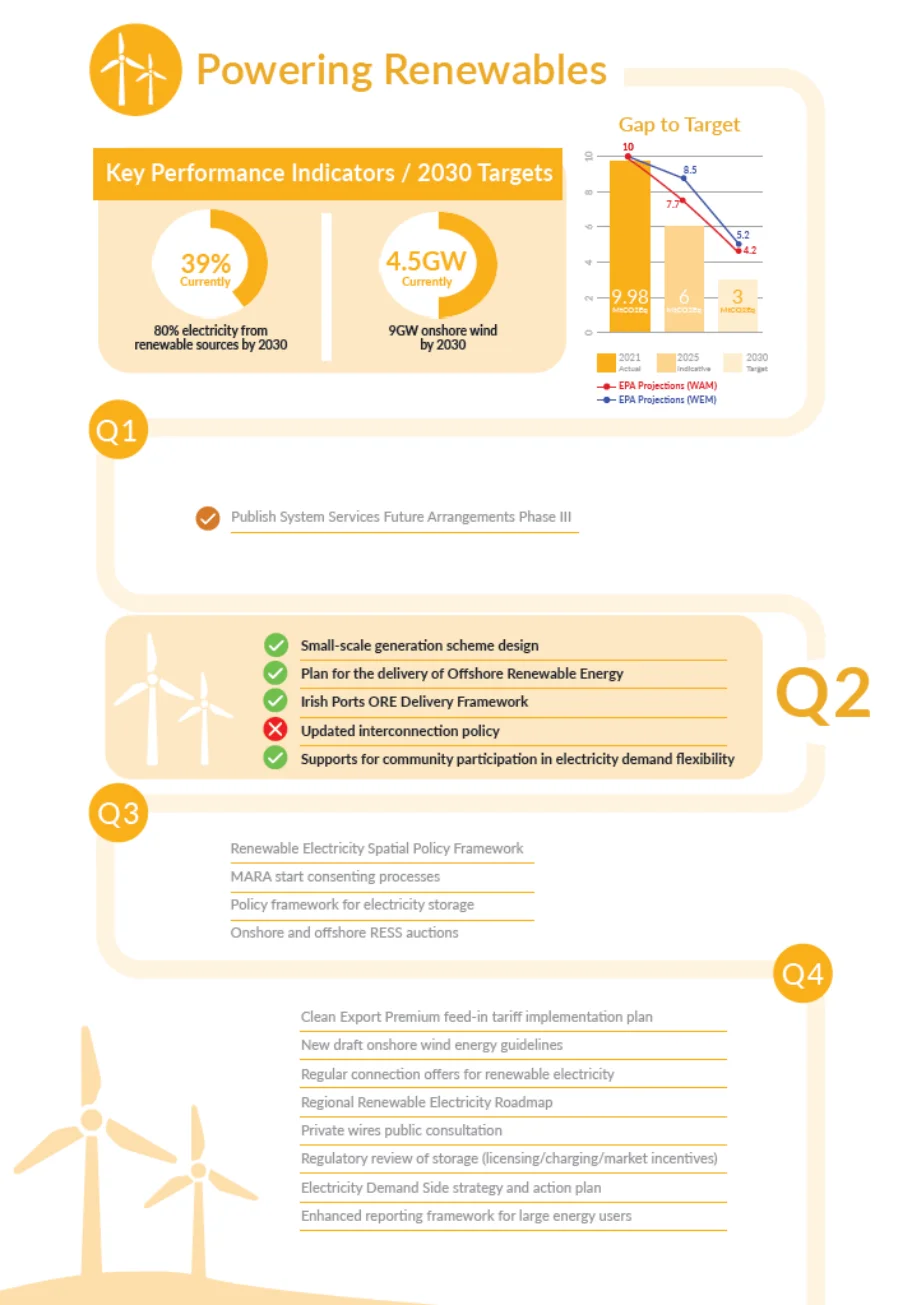
Figure from page 17
| High Impact Action Completed in Q2 2023: Electricity | ||
| Did You Know? The Offshore Renewable Electricity Support Scheme (ORESS) is an | ||
| auction-based process which invites renewable energy projects to compete against each | ||
| other, by bidding as low as possible, to win contracts to provide electricity for a twenty- | ||
| year period. Dedicated auctions are initially required to support Offshore Renewable | ||
| Energy technology in Ireland due to the scale and nature of offshore wind farms. | ||
| What’s new? Under Action EL/23/10B, final results of the ORESS 1 Auction were | ||
| published on 14 June and Notices of Award issued on 21 June, as per the scheduled | ||
| auction timetable. The outcome of the auction provides a route to market for in excess of | ||
| 3GW from four offshore wind projects, to be operational by 2030 at the latest. This is | ||
| equivalent to meet over a third of Ireland’s entire electricity consumption this year and | ||
| enough to power over 2.5 million homes. The next step for the 4 successful projects is to | ||
| seek planning approval from An Bord Pleanála and then commence construction. |
| High Impact Action Delayed in Q2 2023: Electricity | ||
| Did You Know? There is strong Government support for increasing electricity | ||
| interconnector capacity between Ireland and neighbouring markets. There are many | ||
| benefits of interconnection including for Irish energy security, integration of variable | ||
| renewables, competitiveness, and sustainability. | ||
| Why is it needed? An updated Interconnection Policy to reflect Ireland’s increased | ||
| climate and energy ambition, the revised EU TEN-E Regulation, Brexit challenges and | ||
| the increased significance of hybrid interconnectors was due for publication in Q2 2023 | ||
| under Action EL/23/16. Although it did not complete in Q2, substantial work has taken | ||
| place and, subject to Cabinet approval, publication is intended in July. |
Pages 16–18 · View in original PDF