3 Transport
3 Transport
Transport Emissions Context
Share of GHGs
Overall, transport accounted for 15.7% of Ireland’s total GHGs in
in Ireland in
2021, increasing by 6.7% in 2021 on the previous year (Figure 3).
2021
Transport emissions overall have increased by 112.2% between
1990 and 2021, the greatest increase of all sectors (Figure 4).
15.7%
The EPA estimates that transport emissions may rise by 18-19%
between 2020 and 2022, given that all Covid-related travel
restrictions were removed in 2022. The need to accelerate transport
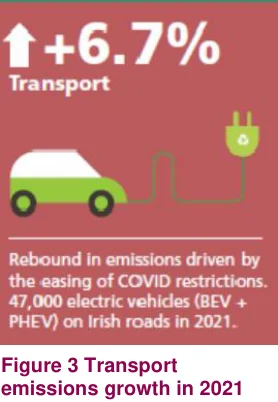
Figure from page 12
emissions abatement is clear as emissions continue to rebound post-
Covid-19.
For CAP23, the approach to decarbonisation of the transport sector in
Ireland was recalibrated to identify additional measures to close the
“gap” to delivering 50% emissions abatement by 2030. The Avoid-
Shift-Improve framework for transport sustainability has been applied,
emphasising the crucial role of spatial and land-use planning in
designing transport systems as well as modal shift to public transport,
walking and cycling. These take priority over fuel-switching in vehicles
Figure 3 Transport emissions growth in 2021
(e.g., electric or biofuels) though significant abatement will also be
achieved by these ‘Improve’ measures.
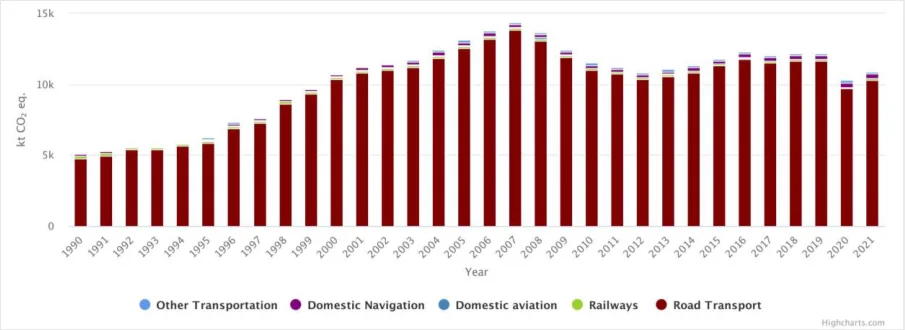
Figure 4 Transport emissions trends 1990-2021 (EPA 2022)
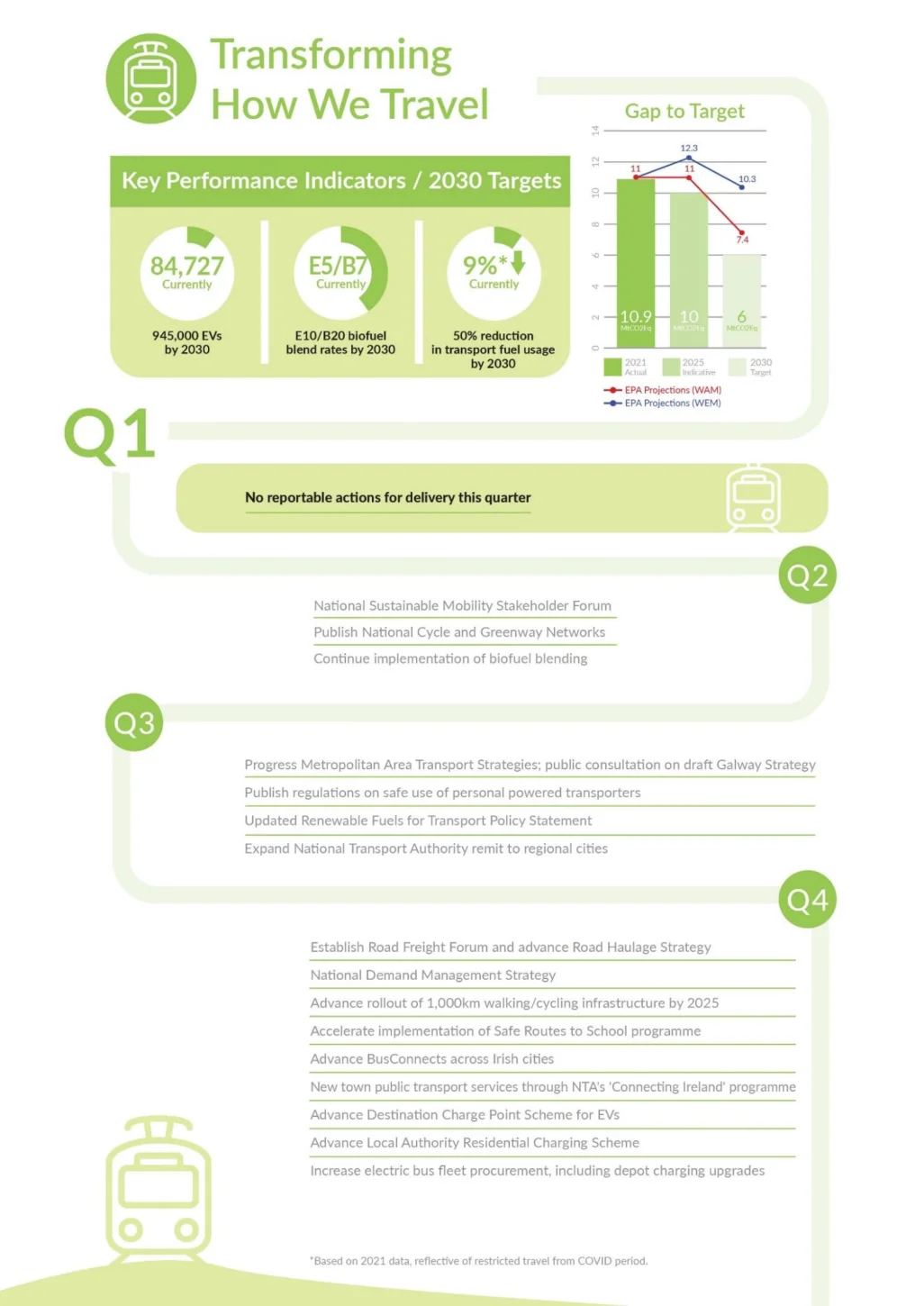
Figure from page 13
| In Focus in Q1 2023: Transport | ||
| Did You Know? Shifting away from petrol and diesel cars to electric vehicles (EVs) will | ||
| greatly help reduce transport emissions and improve air quality. The sales of EVs have | ||
| increased in Ireland in the last few years thanks to Government incentives, an increasing | ||
| variety of models on the market, and improving infrastructure. 2022 saw an 81% | ||
| increase in the registration of EVs compared to the previous year. 24% of all new cars | ||
| sold in first quarter of 2023 were EVs, bypassing the sale of diesel cars for the first time. | ||
| There are now 84,727 EVs registered in Ireland. | ||
| What’s new? From July 1, 2023, the maximum private vehicle car grant will be set at | ||
| €3,500 for application, down from the current maximum of €5,000. This change aligns | ||
| with similar polices in European nations, where countries including Norway, Germany, | ||
| and France, have begun to curb vehicle subsidies and move government investment | ||
| towards charging infrastructure. Other incentives for EVs remain unchanged, including | ||
| favourable tax rates, tolls and incentives for businesses, taxis, hackneys and trucks. | ||
| Earlier in Q1, Ireland’s first EV charging infrastructure strategy was published, shortly | ||
| followed by the launch of a Shared Island Sports Club EV Charging Scheme. This will | ||
| provide €15 million in funding for fast EV charging in sports clubs around Ireland. Over | ||
| 600 sports clubs have already applied. This initiative and others coming later this year | ||
| will support communities nationwide, providing necessary charging infrastructure for | ||
| current and future EV owners. |
Pages 12–14 · View in original PDF